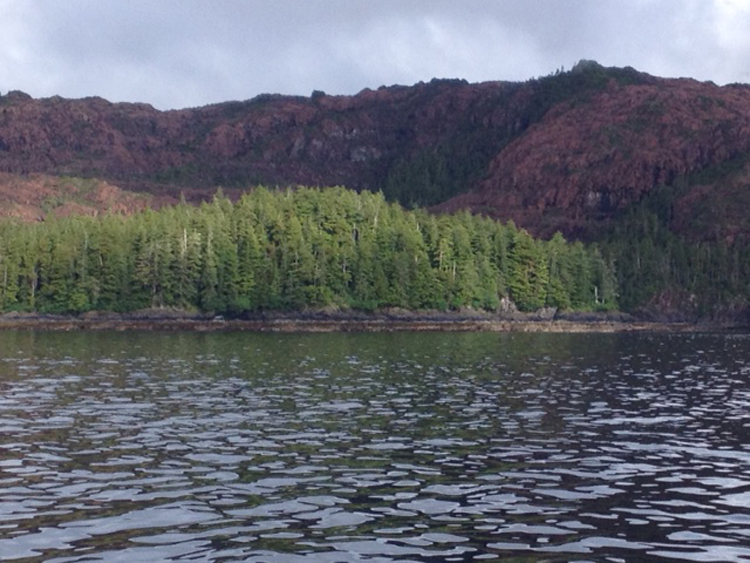
Alaskan fishing regulations stipulate that the person who puts each marked trap down must be the one to pull it up, so at 6:15 a.m. I was trying to jump start Nate from a deep sleep in his single bunk above Fred and me. Keeping up with the older children exhausts him each day, but when I looked again his long, skinny legs and knobby knees were coming down the wooden ladder from the bunk, and he in no time was ready for our next excursion.
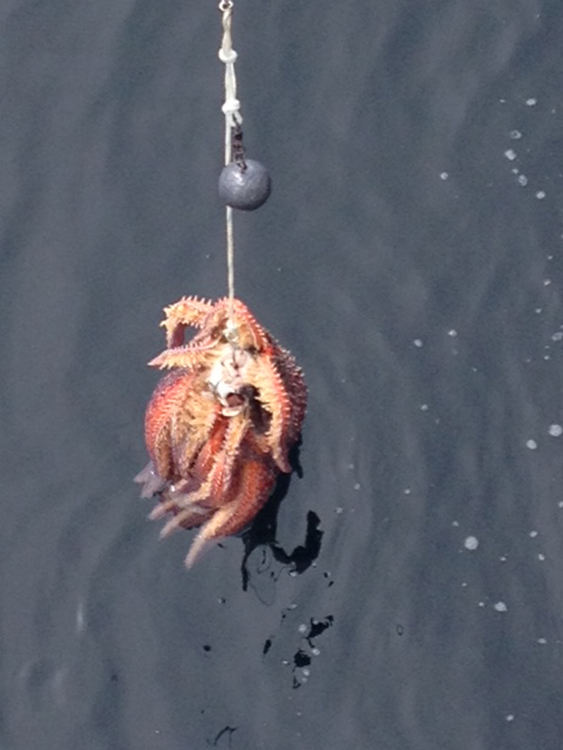
The mist hung low but the drizzle had stopped as we approached the bright orange buoys that marked our traps set the night before. First up was Nate’s, and he shouted at the top of his lungs when it was chock-o-block with glistening, wriggling large prawns with their signature white spot and colorful striations down their body.
His excitement only heightened when the next two traps came up dead empty, and the last two only added a few more to our catch. Back at the boat he proudly reported to the breakfast crowd.
We steamed out of Red Bluff Cove during breakfast, and just afterwards were called to the rail, first for a humpback whale and once for a large school of porpoises that included an enormous granddaddy that seemed to be in charge. They played with us for a long time.
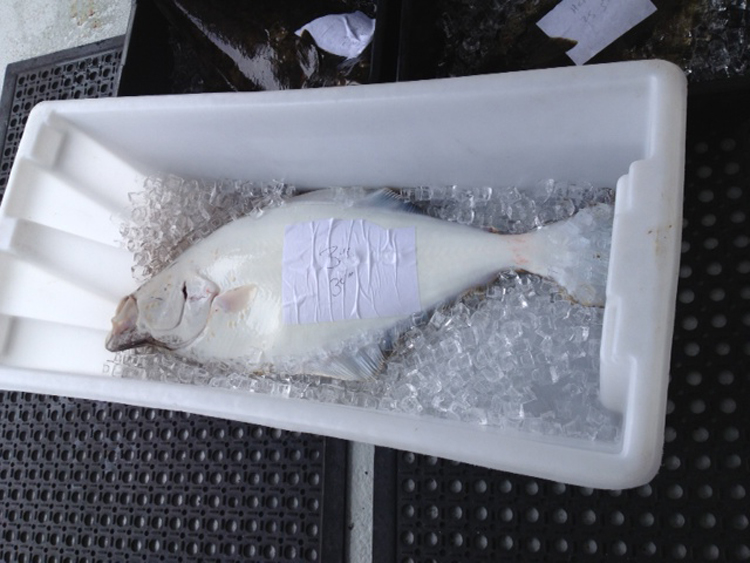
We stopped mid-morning over a known halibut fishing grounds in Security Bay. During the morning there were groups out fishing for halibut from a skiff, and each returned with a fish. Several people fished from the Mist Cove railing; the largest of the halibut caught on board was 34 inches long. One halibut caught from the skiff was 45 inches long! A group that went fly-fishing for salmon had no luck. Six guests went kayaking.
At lunch we steamed on again, this time to Turnabout Island, where The Boat Company had never been before. In late afternoon we went ashore to see if we could find remnants of the Russian colony that had lived there in the mid-nineteenth century. We found more recent debris from twentieth century occupants, and large salmon berries there for the picking, but the roads had disappeared in the thicket of undergrowth.
In the 19th century many islands in the Inland Passage had been used as fox farms, where foxes were fed until they were slaughtered for their pelts.
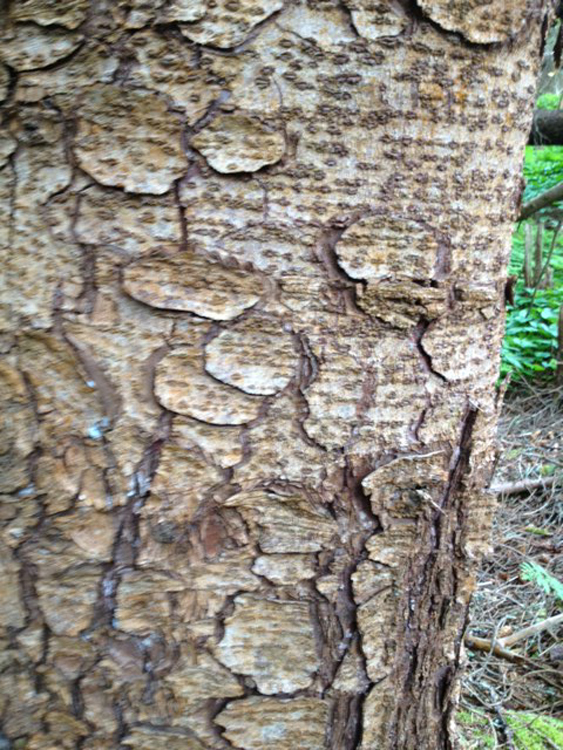
We also practiced telling a spruce from a hemlock by the bark: if the bark looks like potato chips it is most likely a spruce; if it looks like bacon strips it is liable to be a hemlock. Down closer to the ground there was lots of dwarf dogwood (a wildflower) some false lily of the valley, and on the beach a stand of cow parsnip, which is often mistaken for Queen Anne’s lace on steroids.
I noticed the water was warmer, having come over warmed rocks at high tide, and asked Captain Eric if I could swim. He enthusiastically agreed and said he would come too, so by the time we came back to the Mist Cove, put on our bathing suits and got in the skiff we had three children, me, and the Captain!
When we reached shore he led the way by diving off the bow of the skiff, the children jumped in and I eased in off the rail. We all swam as fast as we could to shore. Now I have swum in the Beagle Channel and in Alaska, and neither is as cold as the seawater off of Mt. Desert, Maine that gives you a headache.
