Last Alaska Blog Post

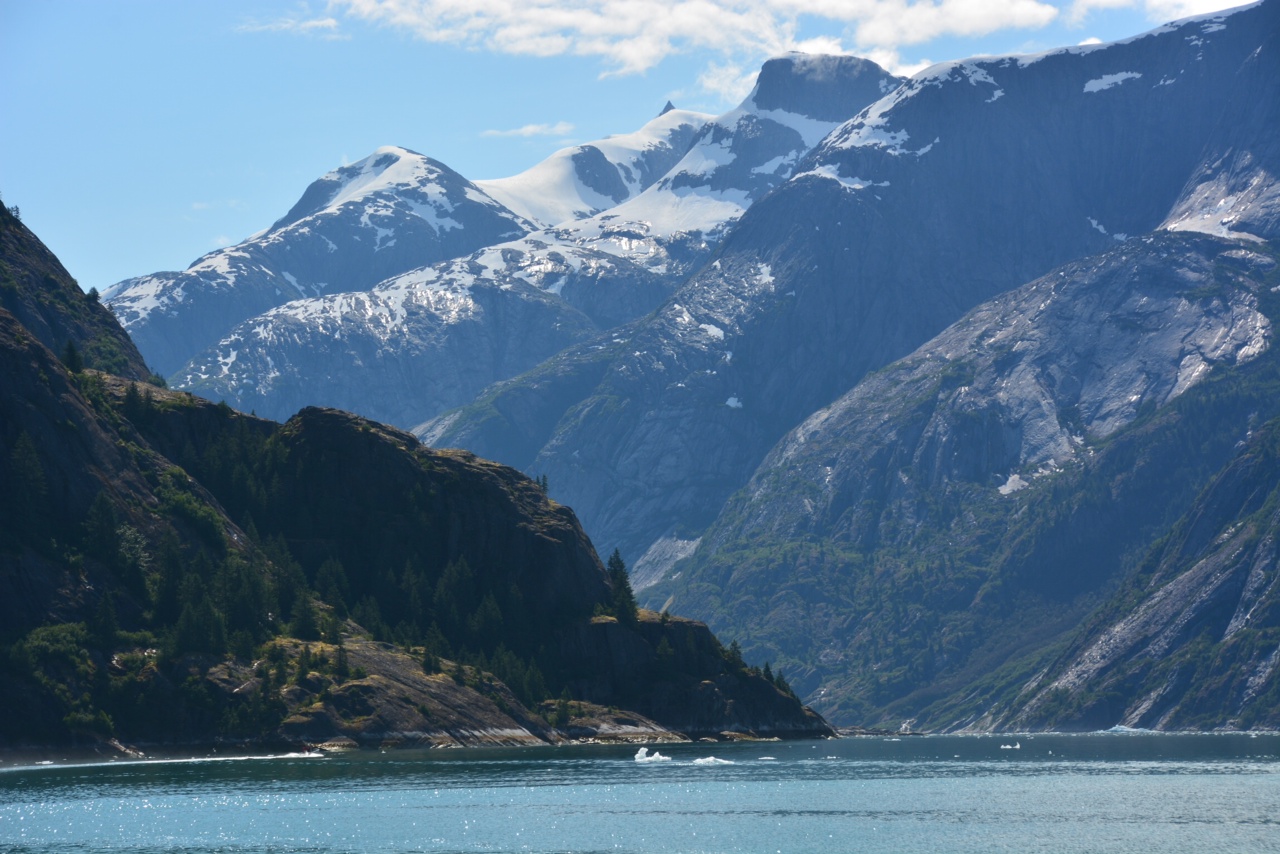
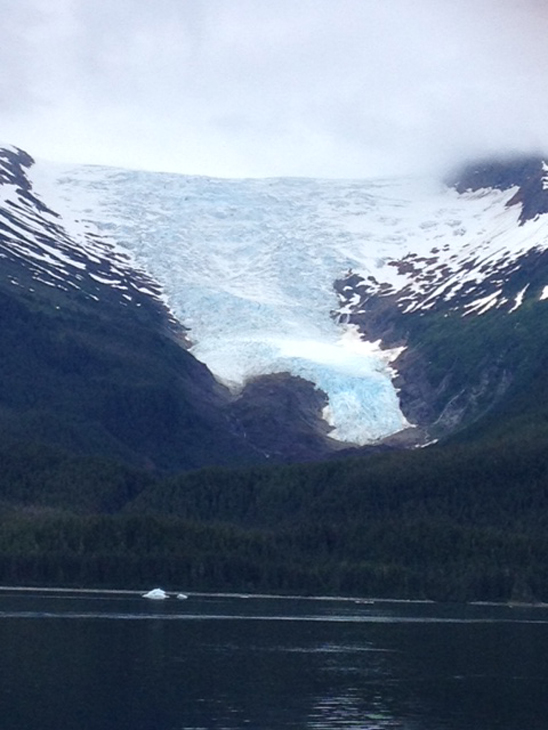
Dawes Glacier1Looking back on our trip, I have to ask myself, what is it that makes Alaska so remarkable? I’ve given it a lot of thought, and I think it comes down to scale and impenetrability.

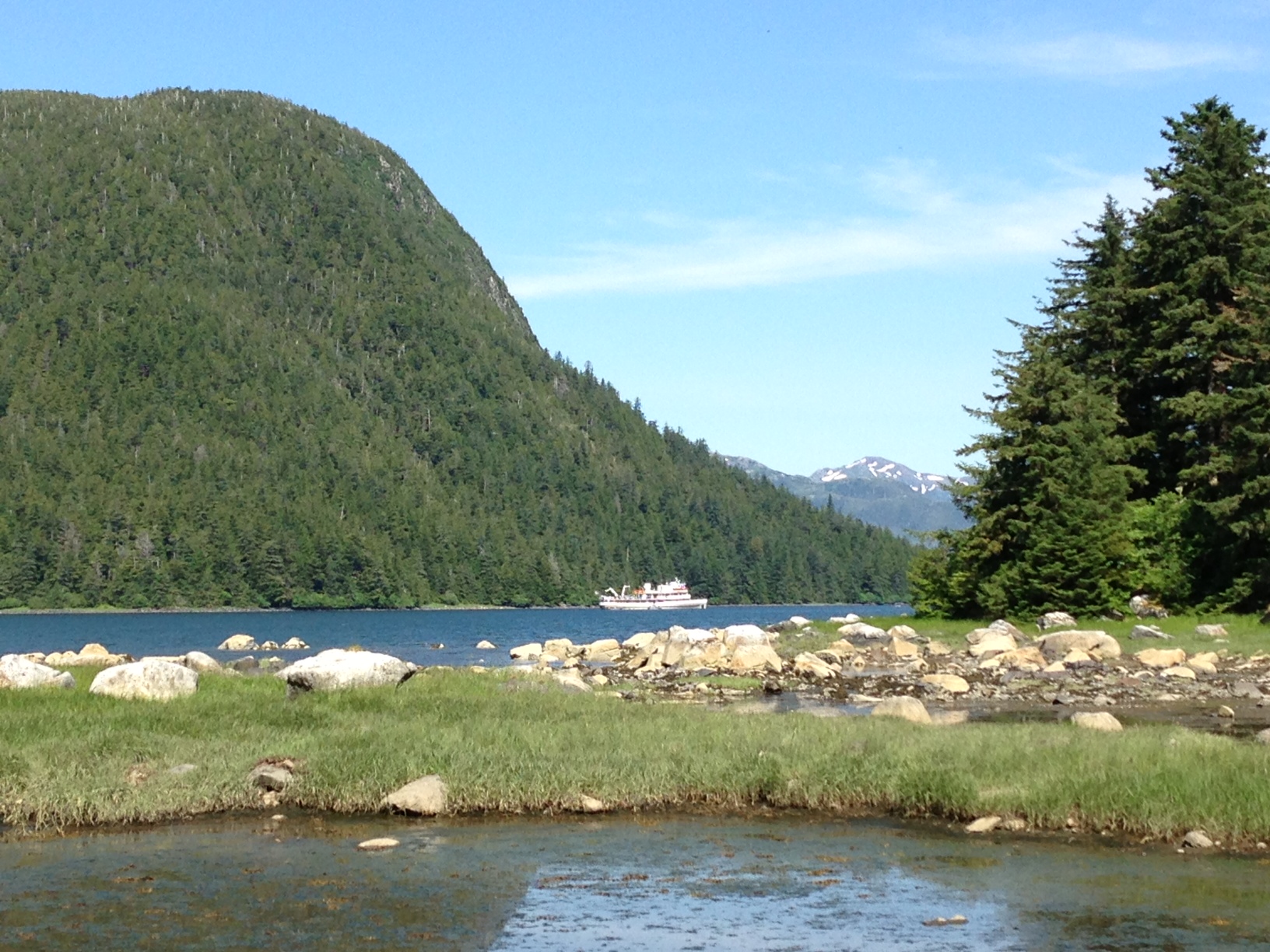
No wonder boats and planes are the best way to get around. There are two roads out of the coast town of Sitka, the old Russian capital. One goes seven miles up the coast and the other seven miles down the coast, and that’s IT…end of road. The impenetrable forests of spruce and hemlock take over.
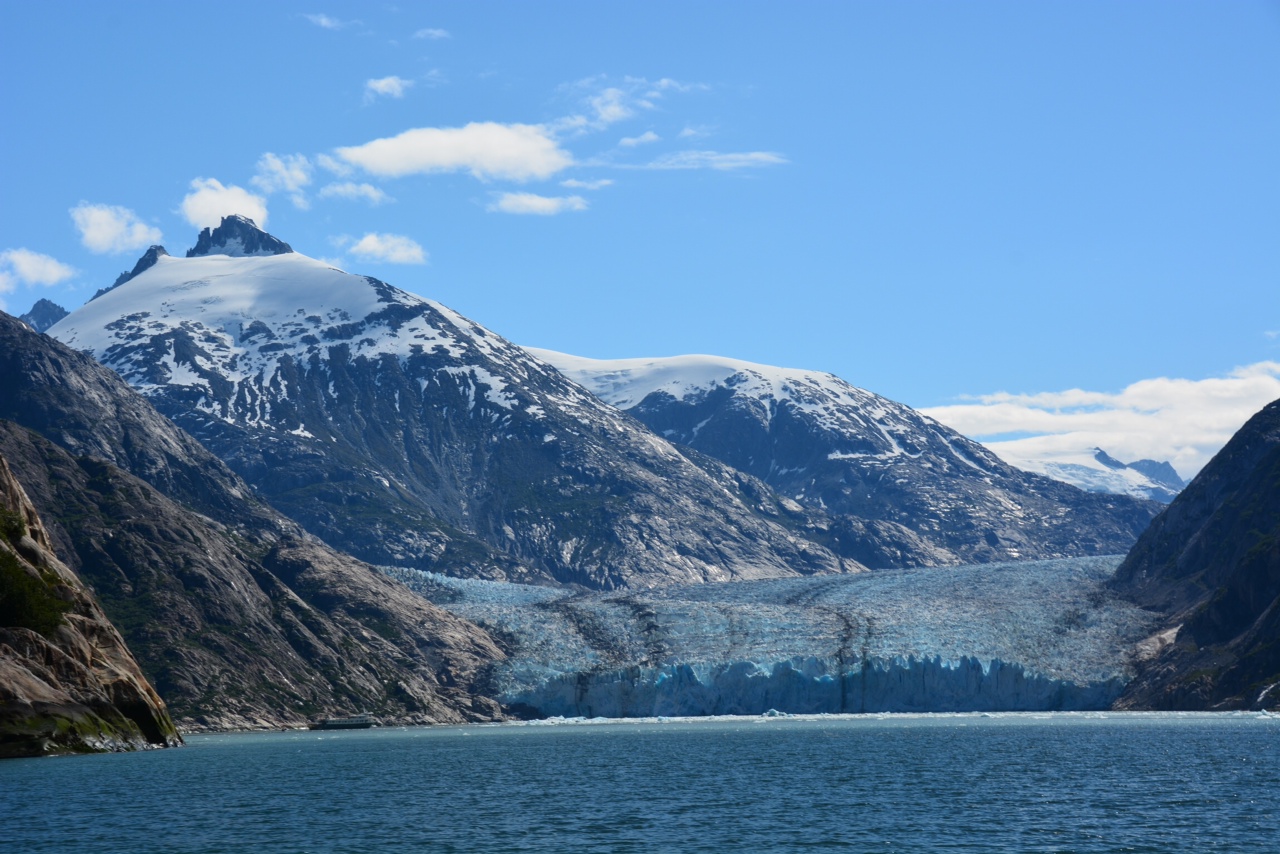
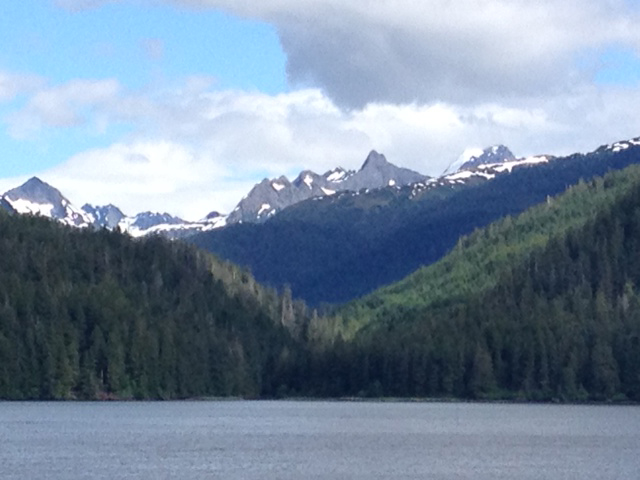
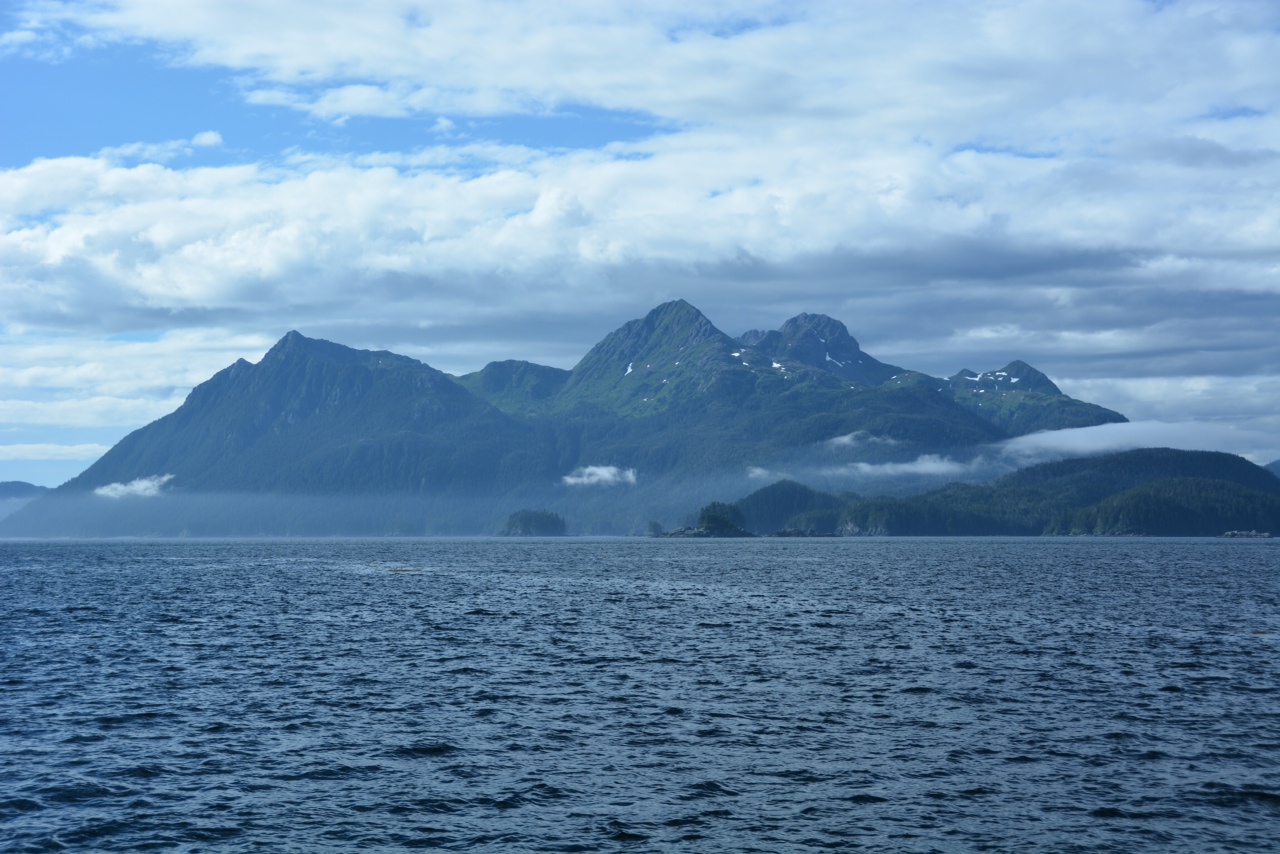
Dawes Glacier 2I’ve been lucky enough to spend time in the Tetons, the Rockies and the Wasatch Mountains, and they are humbling in their size and beauty. I’ve seen the lonely plains of Mongolia and the vast reaches of the Gobi Desert. But nothing had prepared me for the scale of Alaska. Beside it, a human being feels the size of a flea.

Once you get accustomed to it, this is actually a comforting sensation. If you are concerned about the degradation of the environment that humans are causing globally, you are reassured when your eye can take in massive peaks and valleys where no human has ever set foot, and somewhere they probably never will.
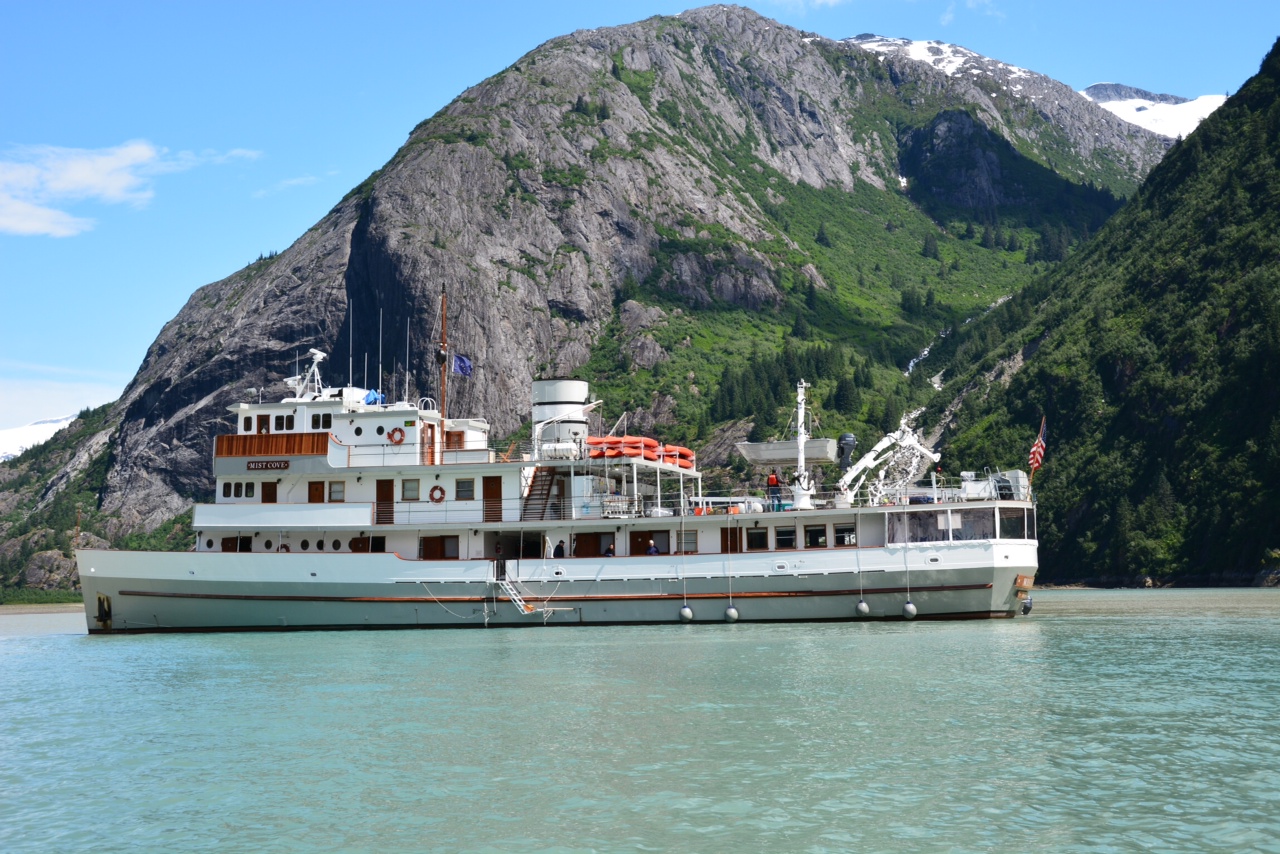
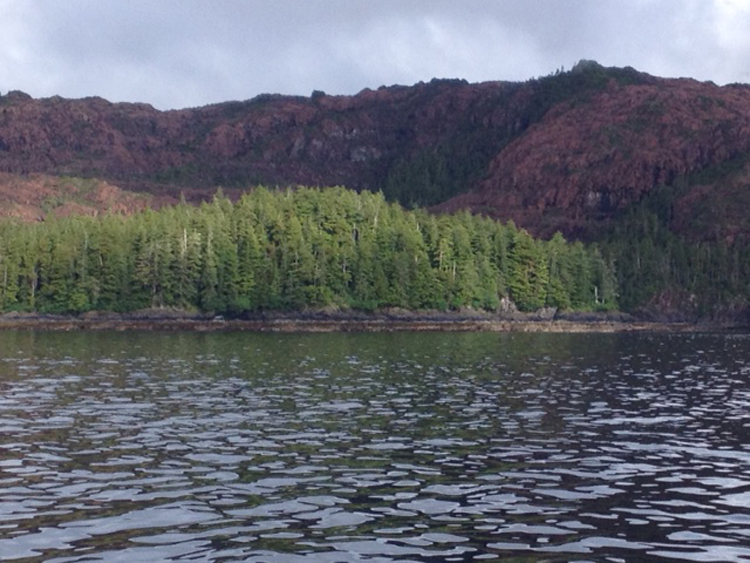
Dawes Glacier 3It is easy to get used to no signs of civilization – no roads, no settlements, no electric lines. It seems a good thing that it is so hard for humans to impose their will on the wilderness that is most of Alaska.

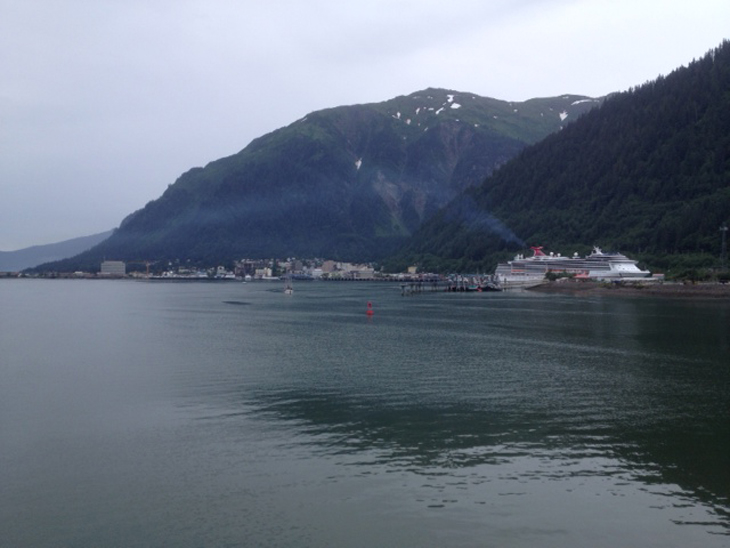
Even the cities of Sitka and Juneau cling to the small amount of land between the mountains and the ocean, as if they were hanging on for dear life.

We would love to go back to Alaska one summer in order to visit the Kenai Peninsula and Denali. Meanwhile I’m enjoying the tired old rounded humps of the Blue Ridge Mountains and all the trails that allow us to penetrate their beauty!
Dawes Glacier 4 Dawes Glacier 5
Dawes Glacier 6 Dawes Glacier 7

Juneau, Clinging to the Coast

Fly Fishing and Running Water

NO 6:30 a.m. shrimping, crabbing or kayaking this (Thursday) morning, as we are underway for Mole Harbor on Admiralty Island. All was quiet until 8:00 a.m., everyone sleeping in as it was also chilly, raining and foggy.

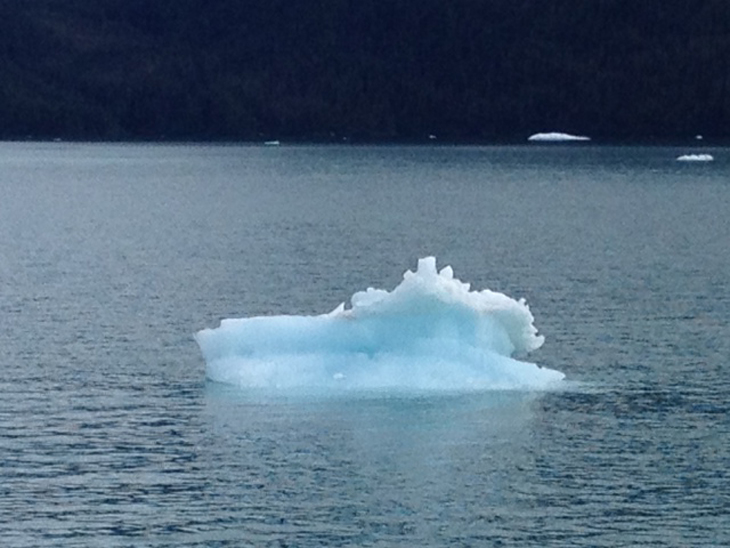
Passing hanging glacier en route to Dawes

By the time my group went off to go fly fishing it had mostly stopped raining. I borrowed waders and boots from the boat, and after we got off the skiff we tramped over acres of kelp, seaweed, mussels and clamshells at low tide to get to the mouth of the river.

With Randy and J.J. as our teachers we got the hang of it pretty quickly. The sound I love most in the world is running water, so for me, standing knee-deep in water for a couple of hours playing with a rod is pure heaven.

Randy caught a Dolly Varden (a type of Arctic char) that was too small to keep, and he got another nibble, but nothing else to report for the rest of us. We had three children along and all of us enjoyed the morning despite coming up short. I would love to do it again, and Randy has promised to take us on the Green River to camp and fish.

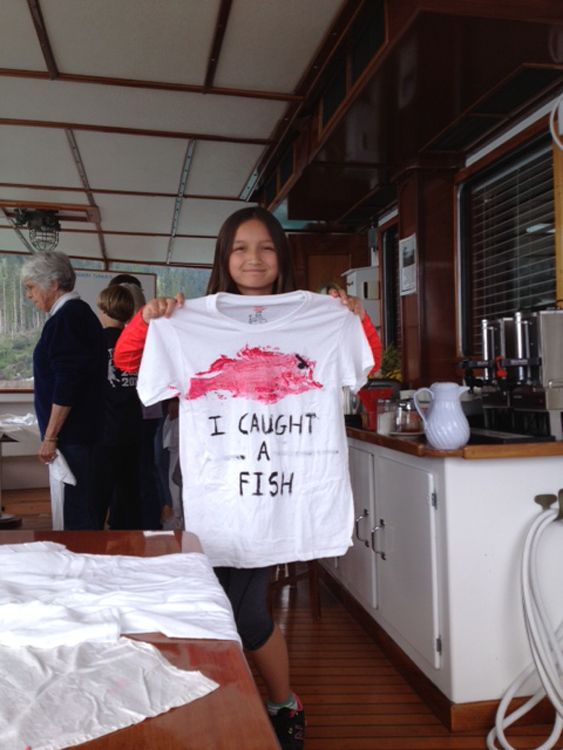
We were underway again at lunchtime, headed for the awesome scenery of glacier country. I took part of the afternoon duty with Will, and after many turns with Fred or me pushing his baby carriage around the deck, I took him to the fantail to watch fish printing on shirts. Children and grandparents took turns painting one of two dead fish and then pressing the fish onto white t-shirts. It turns out we have several artists on board, and they did themselves proud.

The finished product!

I sang every tune that came into my head while keeping rhythm with Will’s hands to distract him from his hunger pangs while his mother painted her fish. When I could think of no more songs, Alice and I sang “99 Bottles of Beer on the Wall,” which went down well until we tried some harmony, at which point Will wailed!

more photos

Pulling Traps and Swimming With the Fishes

Alaskan fishing regulations stipulate that the person who puts each marked trap down must be the one to pull it up, so at 6:15 a.m. I was trying to jump start Nate from a deep sleep in his single bunk above Fred and me. Keeping up with the older children exhausts him each day, but when I looked again his long, skinny legs and knobby knees were coming down the wooden ladder from the bunk, and he in no time was ready for our next excursion.

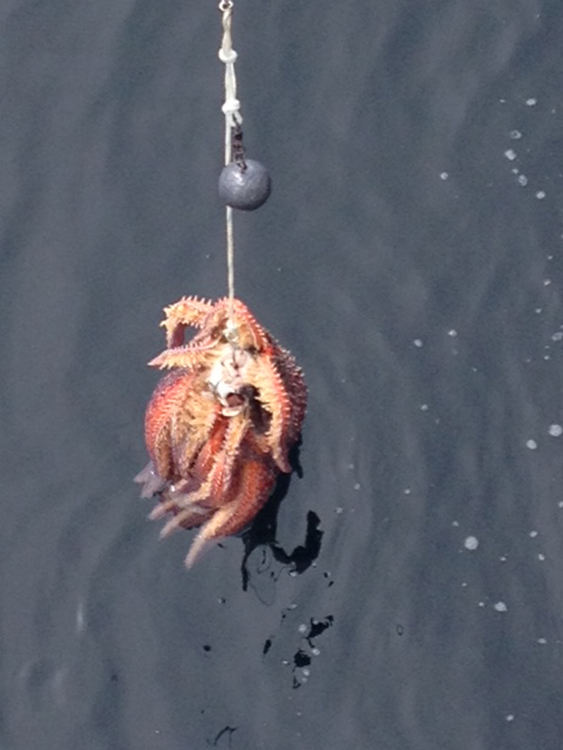
Well it's definitely NOT a halibut!
Well it’s definitely NOT a halibut!

The mist hung low but the drizzle had stopped as we approached the bright orange buoys that marked our traps set the night before. First up was Nate’s, and he shouted at the top of his lungs when it was chock-o-block with glistening, wriggling large prawns with their signature white spot and colorful striations down their body.

His excitement only heightened when the next two traps came up dead empty, and the last two only added a few more to our catch. Back at the boat he proudly reported to the breakfast crowd.

We steamed out of Red Bluff Cove during breakfast, and just afterwards were called to the rail, first for a humpback whale and once for a large school of porpoises that included an enormous granddaddy that seemed to be in charge. They played with us for a long time.

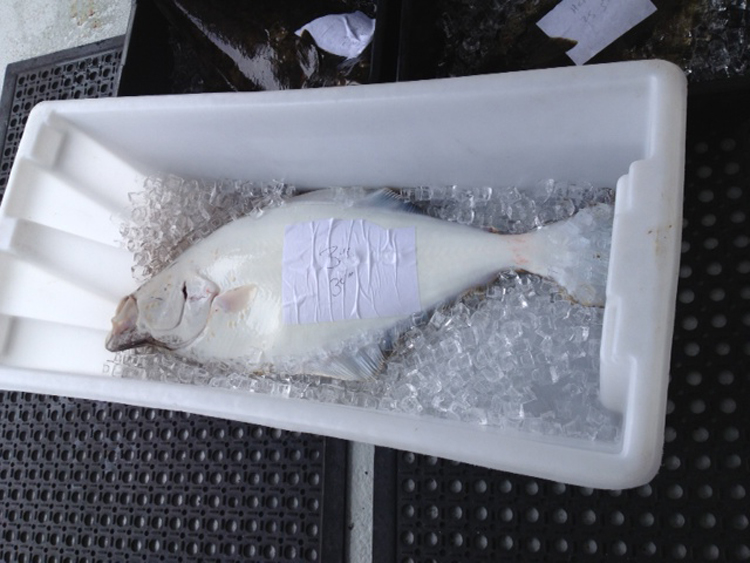
Definitely a halibut

We stopped mid-morning over a known halibut fishing grounds in Security Bay. During the morning there were groups out fishing for halibut from a skiff, and each returned with a fish. Several people fished from the Mist Cove railing; the largest of the halibut caught on board was 34 inches long. One halibut caught from the skiff was 45 inches long! A group that went fly-fishing for salmon had no luck. Six guests went kayaking.

At lunch we steamed on again, this time to Turnabout Island, where The Boat Company had never been before. In late afternoon we went ashore to see if we could find remnants of the Russian colony that had lived there in the mid-nineteenth century. We found more recent debris from twentieth century occupants, and large salmon berries there for the picking, but the roads had disappeared in the thicket of undergrowth.

In the 19th century many islands in the Inland Passage had been used as fox farms, where foxes were fed until they were slaughtered for their pelts.

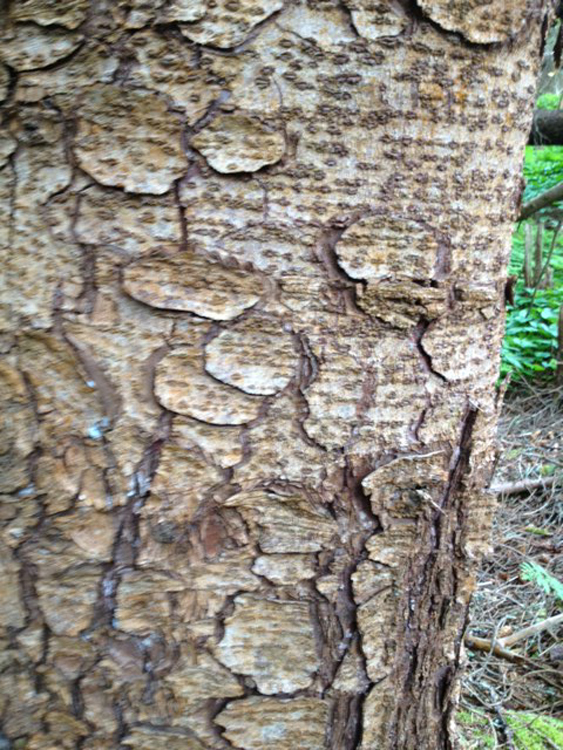
Potato chip bark means spruce

We also practiced telling a spruce from a hemlock by the bark: if the bark looks like potato chips it is most likely a spruce; if it looks like bacon strips it is liable to be a hemlock. Down closer to the ground there was lots of dwarf dogwood (a wildflower) some false lily of the valley, and on the beach a stand of cow parsnip, which is often mistaken for Queen Anne’s lace on steroids.

I noticed the water was warmer, having come over warmed rocks at high tide, and asked Captain Eric if I could swim. He enthusiastically agreed and said he would come too, so by the time we came back to the Mist Cove, put on our bathing suits and got in the skiff we had three children, me, and the Captain!

When we reached shore he led the way by diving off the bow of the skiff, the children jumped in and I eased in off the rail. We all swam as fast as we could to shore. Now I have swum in the Beagle Channel and in Alaska, and neither is as cold as the seawater off of Mt. Desert, Maine that gives you a headache.

more photos

Low Tide and the ABC Isles

At 6:30 this (Tuesday) morning the six guests who had gone out after supper last night to set traps for shrimp and Dungeness crab went back to pick up what they had caught. Luckily for all of us, they came back with many crabs that fit the size regulations of those you can harvest. Amber, the talented chef will have them on the dinner table this evening.

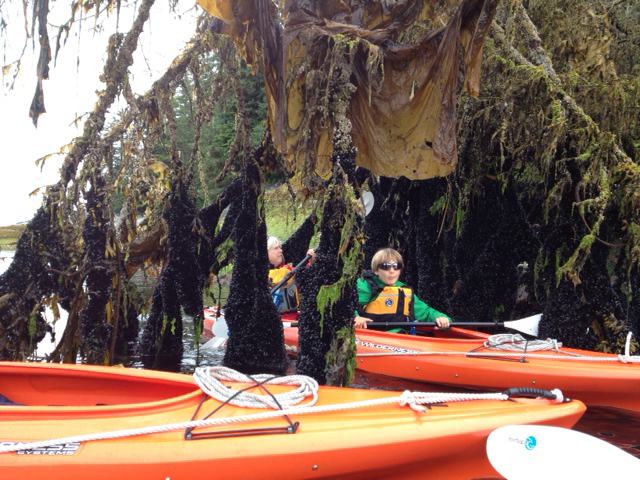
boy in kayak under a tent of kelp
Kayaking under the kelp at low tide

For the morning Nate and I went on a kayaking trip that was headed for a waterfall tumbling off a nearby mountain, a result of the snow melt from unusually warm, sunny weather. Halfway there the wind picked up, and Stephanie, our guide, wisely rerouted us into a more protected bay to nose around close to small islands to see what we could find. Earlier today we had watched from the boat as a whale had been thrashing near these same islands, dislodging small sea creatures that it could chow down on, and scratching its back on a dead tree that lay out over the water.

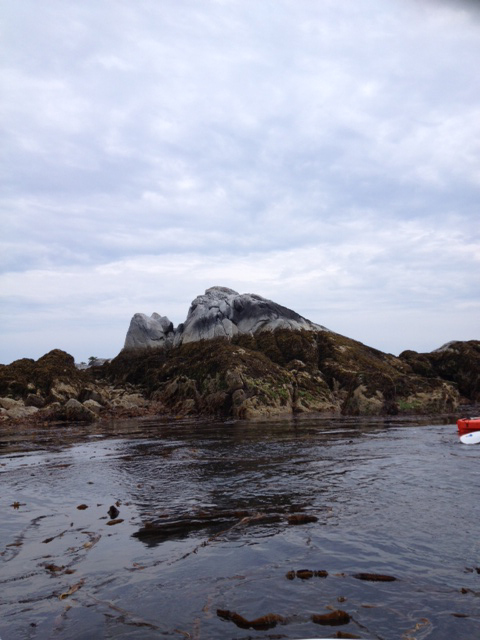
What a 21-foot low tide looks like from a kayak

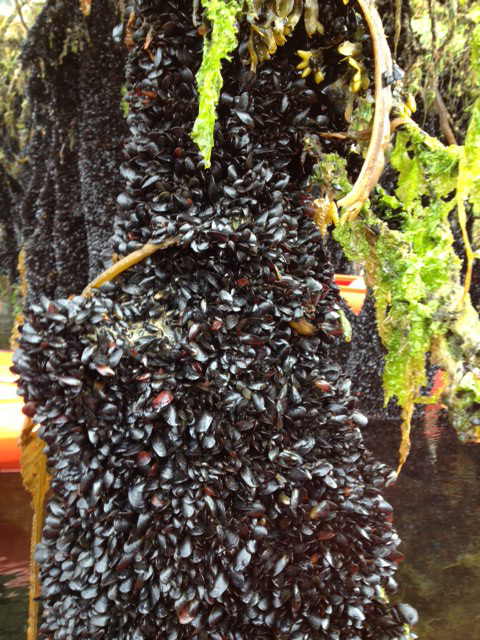
We have a full moon, and so the tide is extremely high, 21 feet, exposing all kind of things that normally stay under water. It is hard to describe how fecund and bizarre a cove is when it has emptied out 21 feet. We found enormous black masses suspended from gigantic kelp that when you got up close to them turned out to be thick strands of hundreds of tiny mussels growing. They terrified Nate.

The kelp can grow a foot a day; by the end of the season it can grow tentacles a hundred feet long. It is much thicker and ropier than kelp in Maine. I was surprised to see large yellow jellyfish in these cold waters, but they are here and are called Lions’ Manes. Apparently they have almost no sting.

Mammoth strands of tiny mussels

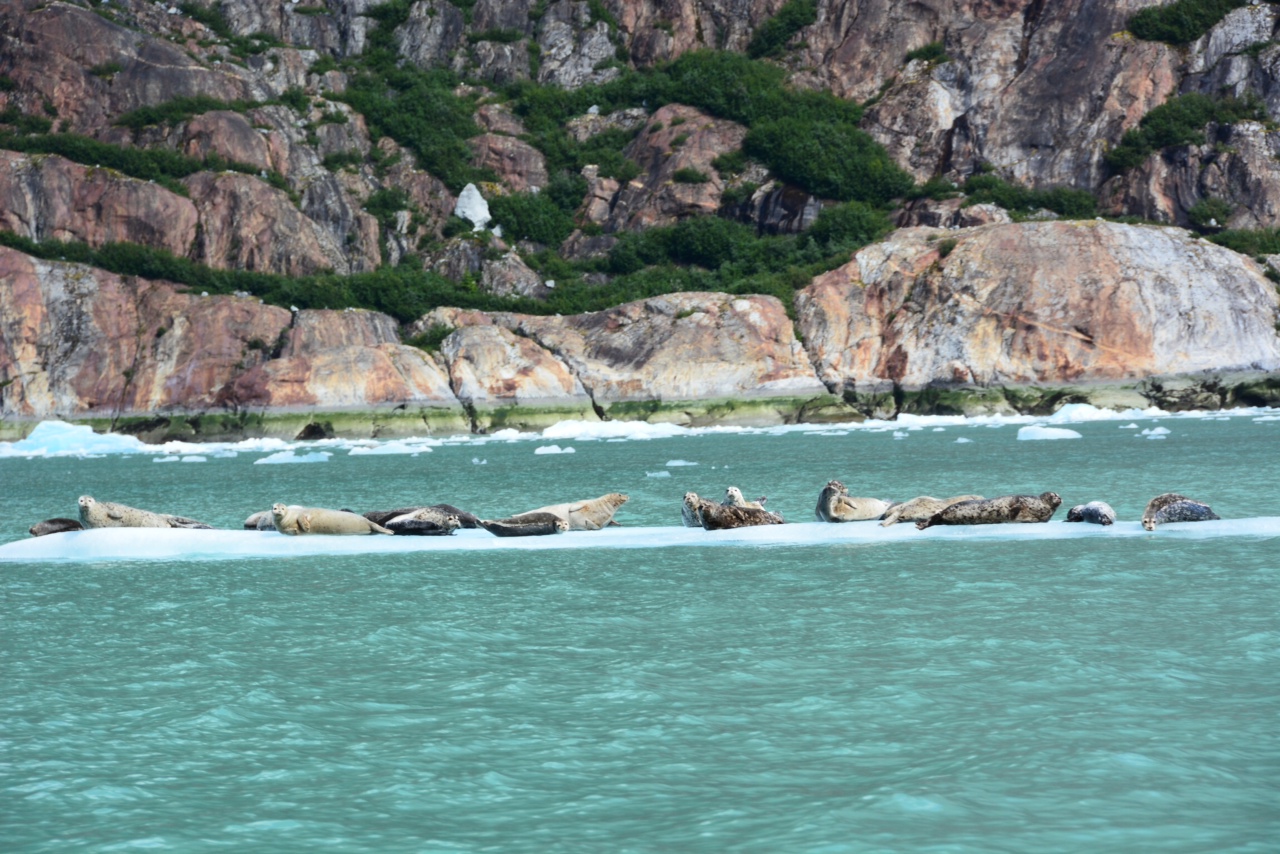
Just beyond, in a tight little protected cove, there were curious harbor seals with their heads above water, observing us. We didn’t approach, as the females have had their young and only feed them for six short weeks, so this is a vulnerable time for them.

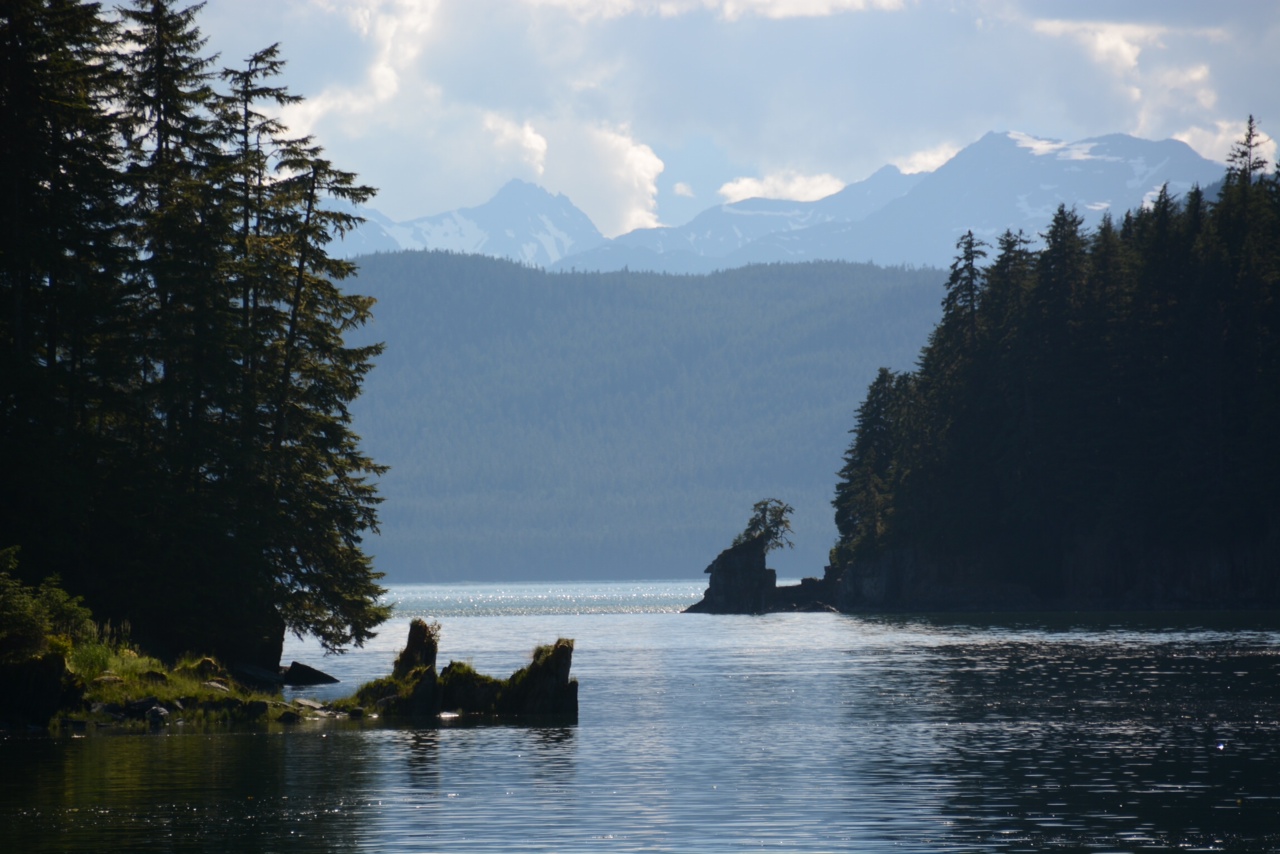
After we got back to the boat and were eating lunch, Captain Eric hauled anchor and we were underway for a couple of hours. For the last two days we have been just off the Gulf of Alaska in the ABC islands – Admiralty, Baranof, and Chichagof. Yesterday, underway with the Gulf of Alaska fast disappearing, we could see all three at once. Now we are threading our way further east. This afternoon we turned into Red Bluff Cove, which is astoundingly beautiful. We are moored in a tight harbor with a thousand-foot waterfall behind us.

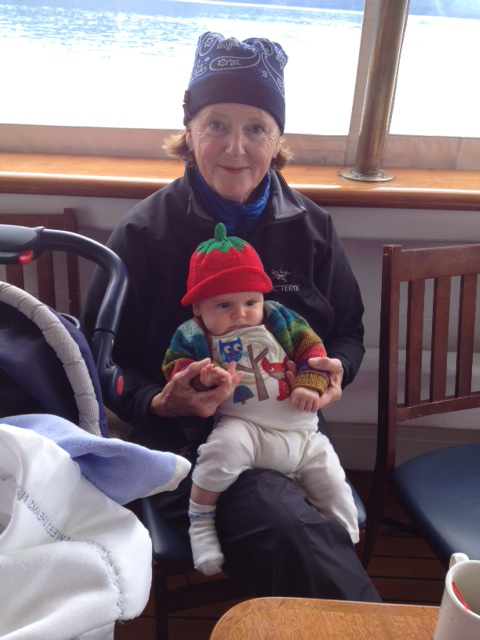
Grandson Will on grandma's lap
Will duty

My afternoon duty was to stay aboard in charge of Will. This went well UNTIL it was time to swaddle him for bedtime. He HATES being swaddled. His face turned from red to purple as he screeched. If looks could kill I would be dead. The more he struggled the harder it became to get it done; I was sweating bullets, but finally I got him to bed, and eventually to sleep.

After dinner six of us, including Nate, went off in the skiff to put down traps for the spot prawns. It was drizzling but quite warm, and the job was quickly done. We had a fast ride back to our hot showers and warm beds.

Kayaking, Hiking and Porpoises

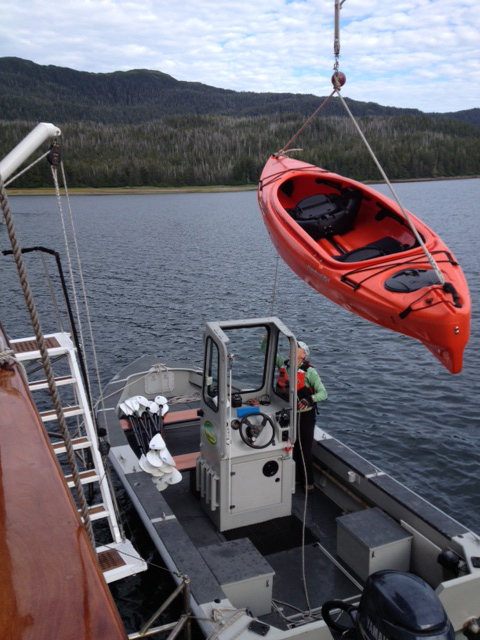
kayak on pulley moved by boat operator
All the tough jobs were mechanized

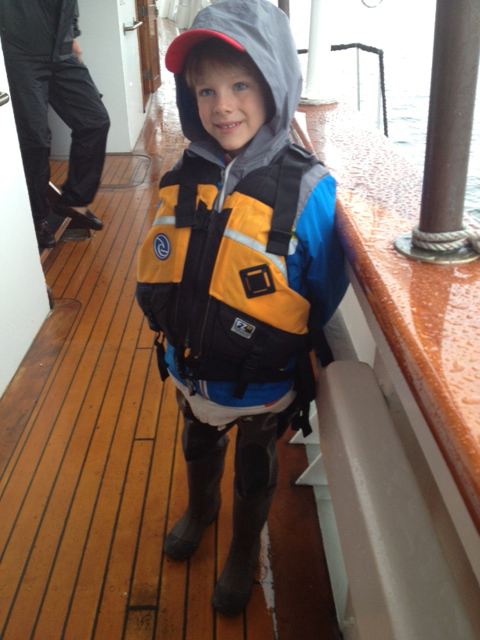
Today (Monday, June 24th) began with kayaking at 6:30 a.m. Remember, there is almost no night here, and everyone is still on east coast time, so there were plenty of us awake at that hour! Nate is sleeping on the top bunk in our cabin, and at 6:10 a.m. we mustered out of bed and put on our rain pants. I was particularly glad to see coffee offered before we set off!

The Boat Company has two-seater kayaks for everyone on board, as well as five skiffs, all of which live on the upper decks and are winched down to water level as needed. Very soon we were all away to explore.

Nate, ready for kayaking
Kayaking with a garrulous seven-year-old is a sketch. Nate is an exuberant child, and every rock looks like a bear, which he shouts out triumphantly for the other kayakers, making it unlikely we will actually come upon a bear, or any other animal with ears. Our instructions are to never get out on land from our kayak, as bears particularly love to graze in the high grasses right near the shore.

Looking around me, once I was thoroughly awake, I thought to myself, how lucky can you be??? Kayaking on a beautiful morning in Alaska with your grandchild…it doesn’t get any better than this!
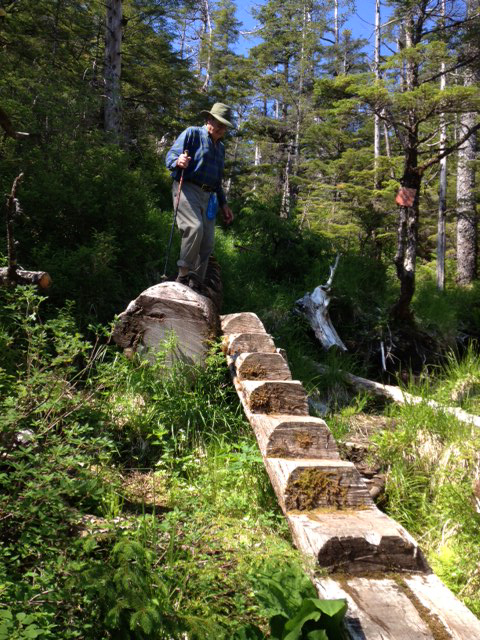
Back an hour later, we felt as if we deserved our blueberry pancakes and fruit. At breakfast we had to decide what we would do with our morning. The options were: 1) stay on board and relax 2) go halibut fishing from a skiff 3) go on a four-mile hike from the shore to an upland lake, via “The Stairway to Heaven,” a long series of steps carved out of tree trunks.

primitive wooden stairway in the forest
Fred negotiating the stairway hike to a lake with leeches in it!
Fred and I chose the hike, and were so glad we did. It was strenuous, but we had three leaders, so we had both a fast and a moderate speed group, and then a diplomatically-named wildflower group hiking with our botanist, into which we immediately placed ourselves. We made it to the lake and back and learned a lot in the process.

The fishermen came back with three halibut (one of which had to be thrown back) and a rockfish, which we will have for dinner Tuesday night.

Lunch was delicious, and this afternoon we are steaming 30 miles into the Inner Passage, so we have time to wash clothes, read and relax. Typical of the thoughtful details included in this trip, there is a drying closet for your washed clothes on the top deck.

While writing this post, the motor slowed – a sign that we are passing something interesting. Our captain spied sea dolphins, black and white flashes under the water going faster than the boat, surfacing just long enough to arch over the waves, and staying off our bow to gather thrown food. Soon we were all on the rail, feasting on their grace and beauty.

My clothes washing was interrupted once again, this time to watch a humpback whale spouting, its huge grey body barely surfacing. When it decided to dive the body rolled, displacing a heap of water, its tail flipped us goodbye, and down it went.

photo album