Ireland 5

Beautiful Ruins
Beautiful Ruins

A week is so much too short a time for visiting even a small part of Ireland, but that’s all the time we had. We snuck in a trip to Glendalough in the Vale of Avoca in Wicklow National Park on the day we were en route to Dublin for our flight home early the next day.

Approaching the Vale of Avoca you are actually not far from a major highway and to the ever-spreading outskirts of Dublin, but if you approach over the country roads it takes much longer and in that rugged, remote area you feel miles from civilization. Imagine how St. Kevin felt when he set up a monastic order at Glendalough in the 6th century! Its beautiful ruins are much visited today.
Upper Lake
Upper Lake
Lower Lake
Lower Lake

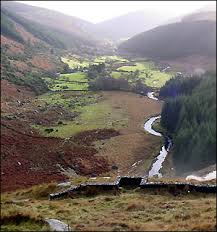
The town of Avoca overlooks the valley. The valley has two lakes, the upper and the lower, with the monastic settlement in between the two. The valley is particularly beautiful, especially the site where a big and a small river come together to form the River of Avoca. Sir Thomas Moore made these rivers meeting famous with his song:

There is not in the wide world a valley so sweet,
As the vale in whose bosom the bright waters meet;
Oh, the last rays of feeling and life must depart,
Ere the bloom of that valley shall fade from my heart.

Reddish stones in the stream and on the mountainsides are reminders of the copper mining that was done here at one time.
Hiking with Family
Hiking with Family

We came to hike on a cold, blustery morning, accompanied by several of the Day families who had been so welcoming to us all week. We were every age from the seventies down to seven, strung out in a long line as the children scrambled ahead and their parents tried to keep up with them, and we tried to keep up with the parents!

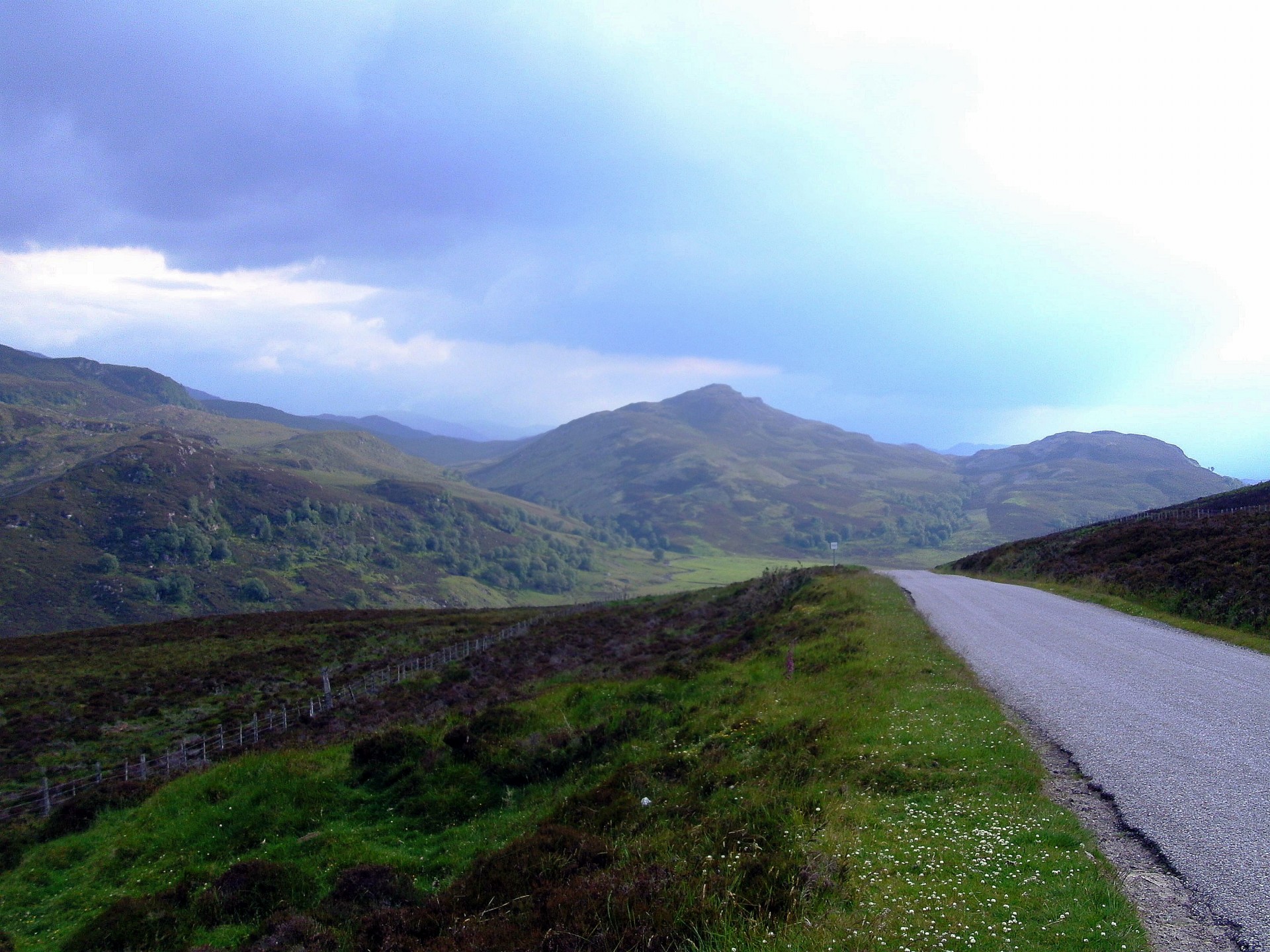
We walked up the valley toward the wild beauty of the Upper Lake, rimmed by the mountains on which we were hiking. In wintertime, the mountain across from us looked a lot more like Scotland than Ireland, its heathers and gorse thriving in the treeless landscape.

When Fred and I realized the “through hikers” were headed around the top of the Upper Lake on a seven-mile hike with poor footing and a heavy wind blowing, we were wusses and chose to take a different road at a higher elevation than the one we had come out on to return home. This gave us gorgeous views of the Vale of Avoca from a height.
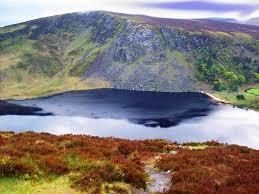
Upper Lake
Upper Lake

When the others got back to the parking lot, each family opened the “boot” of their car or van, and out came our last Irish feast, complete with wonderful cheeses, hot food, and smoked salmon with all the fixings.

Reluctantly, we said goodbye to the most hospitable people in the world, and climbed into the hired car that, in less than an hour, dropped us off in the soulless lobby of a hotel at the Dublin Airport.
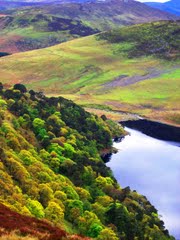
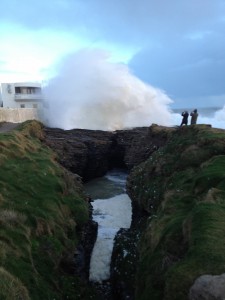
Upper Lake 2
Upper Lake 2

Hook Lighthouse – Ireland 4

Hook Lighthouse
Hook Lighthouse – 1

We had one small car for most of our excursions, and on one overcast, windy afternoon we set out for the Hook Lighthouse at the end of the Hook Peninsula. The seats in the very back of the car you had to fold yourself into, but luckily the twenty-somethings volunteered to do most of the folding. Getting in was a synch compared to getting out.

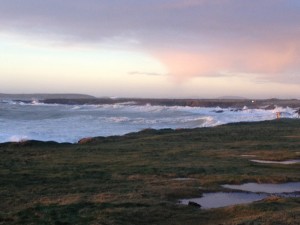
It is a good long ways out to the point, so it was late afternoon with fading light and wild surf from a ripping wind when we arrived. We were careful not to get too close to the surf, because as many as seven different currents clash off the point, and you never knew where the spray would be coming from next. It was easily strong enough to sweep you off your feet and take you with it back out to sea. Unlike American sites that over-protect the visiting public, at the Hook if you dared the sea the consequences were yours to reckon with.

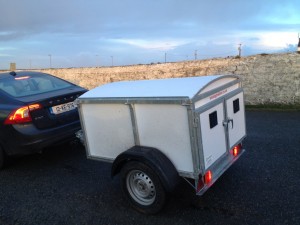
Trailer
The Trailer

I spied something at the Hook that I’d never seen before – a dog trailer – which of course makes sense in a country of small cars and many dogs, quite a neat rig!
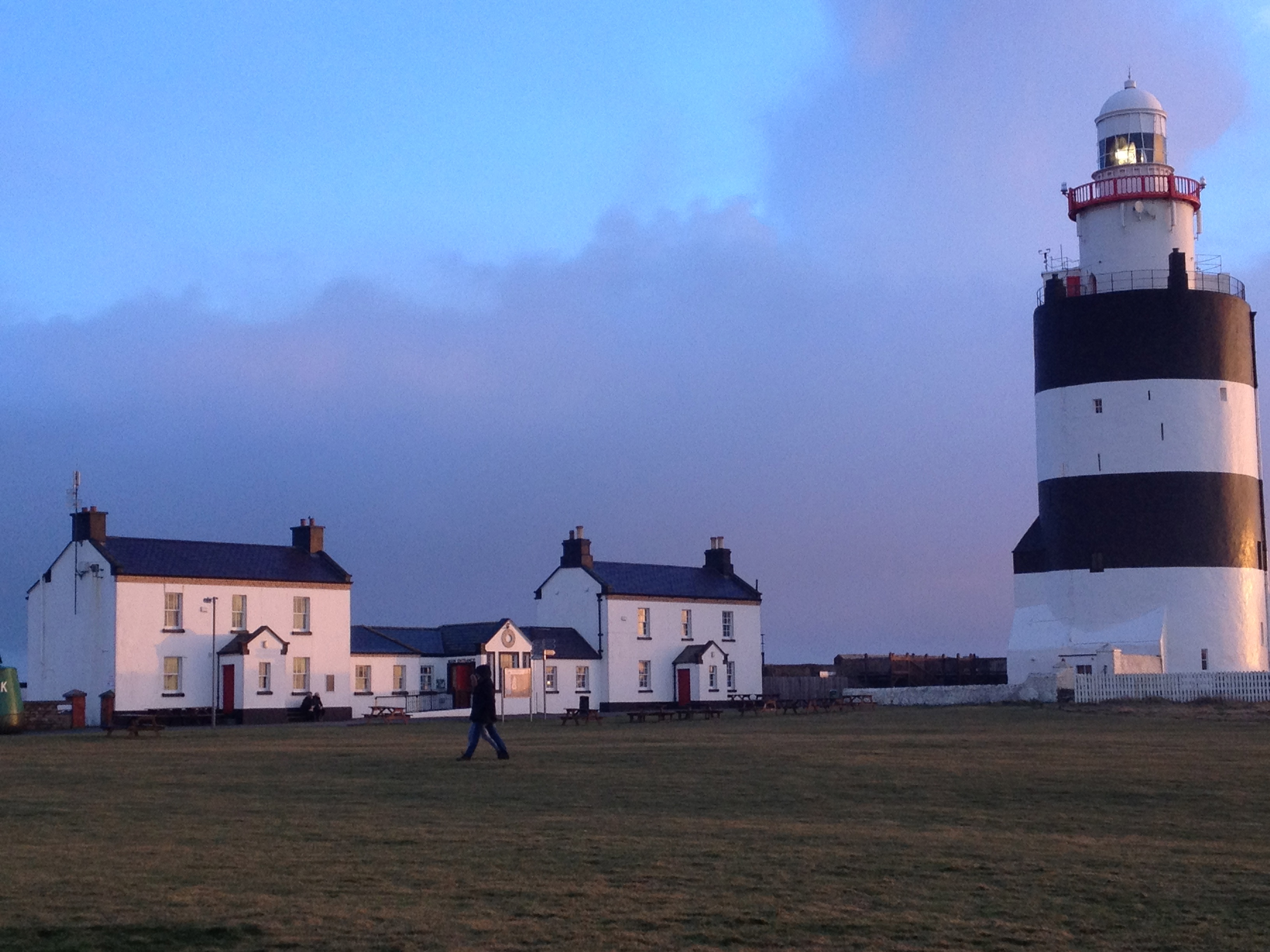
The Hook is among the oldest lighthouses in the world. It was built by the Earl of Pembroke in the early 13th century to protect his ships headed into the port of New Ross. In its early days the lighthouse was manned by monks who lived at the end of the peninsula. Their job would have been to keep beacon fires burning at the top of the lighthouse. This medieval structure is made from limestone and has four stories connected by a stairway with 115 steps. The first three stories each have a stone fireplace. The upper storey is narrower, built originally for the beacon fire, which was later replaced by a lantern.

Hook Lighthouse View
Hook Lighthouse – 2

Lighthouse keepers replaced the monks in the 16th century, and coal replaced the beacon fire in 1671. A whale oil lantern came next in the 18th century, gas in 1871 and finally, electricity in 1972.

In the 1860’s three buildings were built for the lighthouse keepers. When the light was automated in 1996, these buildings were transformed into a visitors’ center, and the Hook was opened to the public.

It is an incredibly dramatic sight, the black and white, sturdy lighthouse at the end of the land, still there after all these centuries to challenge the sea.

[codepeople-post-map]

IreLand 3

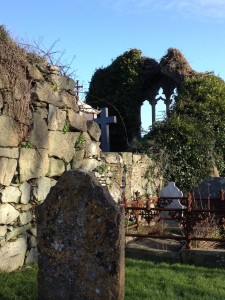
About a mile’s walk down the country lane from where we were staying was the hamlet of Tomhaggard. On today’s main road is the 1813 Catholic church of St. Anne’s, in use today. Very close by are two previous churches on either side of the back entrance to town, one is 5th century and one 13th century. The first is set in a beautiful landscaped park maintained by townspeople, and the ruins of the second have become a graveyard.

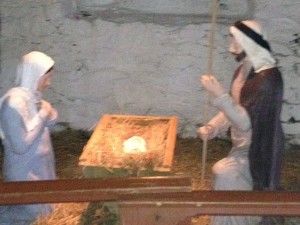
Mary and Joseph
Mary, Joseph and the Baby Jesus in the 5th century Sanctuary in Tomhaggard, Ireland

The earliest place of worship, the 5th century Celtic church, stands above a sacred grotto in a lush (even in December) peaceful park. It is a small, windowless, dirt-floored room. It’s very simplicity is the perfect setting for life-sized figures of Mary and Joseph, which at Christmastime worship the baby Jesus in a setting probably very like the stable where Jesus was born.

Below, by the grotto, there are benches to sit on while the water from the two springs, dedicated to St. Anne and St. James, flows down channels on either side.

Across the lane is a hill with the ruins of the 13th century church at the top, surrounded by both the ancient and modern graves of families from the surrounding area. The graves are packed in, even inside the ruins of the church, the older ones pushing upwards at odd angles or lying flat.

13th century church in Tomhaggard, Ireland

England having ruled Ireland for so long, whenever England was in religious turmoil Ireland was as well, with the English landlords trying to convert Catholics to Protestants, by force if necessary. There is a monument to those who lost their lives in those fights as well as a monument to those who fought for freedom from England. One of the graves in the ruins is of a priest who was murdered in the church. At the far end of the little park is a monument to the many fishermen who set off from that coast but never returned.
TO BE CONTINUED

[codepeople-post-map]

Ireland 2

imgres
Wexford

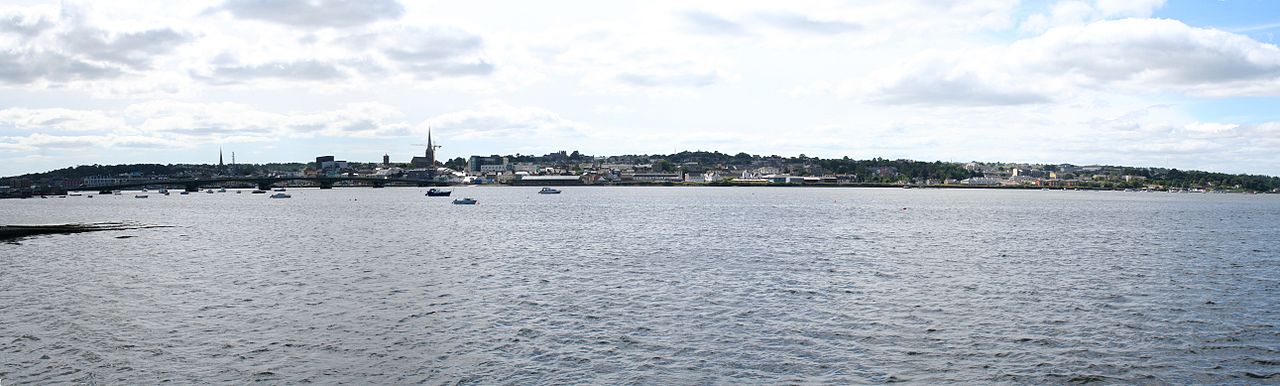
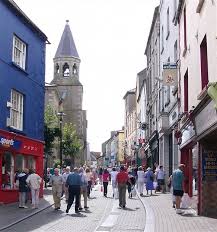
Although we had read about the Celtic Tiger’s collapse, the southeast of Ireland seems to us to be doing well, and tourism is a big part of that. The city of Wexford is bustling; it’s main shopping street full of pedestrians winding their way along the narrow, brightly lit chain of small, trendy shops. Apartments are above the shops, and the windows of pubs as well as chic restaurants invite you in. We ate dinner in town New Year’s Eve, and our dear but overworked waitress responded to any request by saying, “No bodar a’tall, (No bother at all) which is my new favorite expression.

searchIn almost every house we went into during our week in Ireland, the “tele” was on, as in the United States. But it wasn’t football, or even soccer, people were watching, it was horse racing! At countless local tracks around this island and at Leopardstown near Dublin, children and adults gather to watch the horses run.
They know the trainers, the owners, the odds and the horses themselves. And the races go off rain or shine, the horses sloshing through grass tracks over hurdles and on the flat. Horses are a national pastime.

My second favorite expression came from an announcer, extolling the merits of a winning horse. He summed it up with “He’s a bonny horse!” We think of “bonny” being applied to females, as in “She’s a bonny lass,” but in fact it is derived from the French word “bon,” meaning good, in many different nuanced ways according to what is being described.

The horse of the moment was “Hurricane Fly,” a ten-year-old hurdler running against much younger challengers at Leopardstown. He won handily, and he and his jockey, Ruby Walsh, were the talk of the New Year’s holiday.

If you go fox hunting around Wexford you need to know how the smart horse approaches the famous hedges and banks that often line the roads, and remember, as I describe it, that there is almost as much water as soil in Ireland.

If the hunt needs to get off the road and into a field, the riders first must find a place where the hedges are less than impenetrable and jump up onto the few feet of solid ground they afford. Then the horse must stop. Ahead will be an almost vertical descent gingerly accomplished by the horse’s front feet, which makes the rider seem to be lying down on the horse. About a third of the way down, the horse must use his back legs to make an humongous leap across a ditch filled with water. Hopefully they land safely in the field. I know where I would land….and I’m not going hunting in Ireland!

Go to YouTube: Irish Bank Part 2 to see a short video on how it’s meant to be done.

Lucky Enough to be in Ireland

Winter Delights
Winter Delights

We are lucky enough to be in Wexford, Ireland for a week over New Year’s, thanks to our friends, Jimmy and Emily Day. Jimmy is a racehorse trainer originally from here. We arrived in winds gusting to fifty miles-an-hour, knowing we’d have to go on to Manchester if we didn’t get down on our first pass. A big plane and a super pilot combined to bring us down safely, thank goodness.

Jimmy’s ten brothers and sisters, their spouses and his parents have all dedicated this holiday week to making sure we experience Irish hospitality and come home five pounds fatter. I thought I was pretty good at saying “no,” but it is just not a word that gets across – your pint is magically refilled, your “spot” of Jameson’s Irish whiskey replenished, your plate heaped with ham, turkey, cranberry sauce, potatoes, Brussels sprouts, broccoli, peas, homemade soda bread etc. Desserts are in the middle of the table; a cake as yet untouched, yesterday’s trifle, and the day-before-yesterday’s Christmas pudding. Oh, and a double-crust apple pie! All are urged on you. The pudding requires a dousing with some Irish whiskey to “cut the sweetness.”

The trouble is, if you stop eating you are literally ruining your hosts’ pleasure – you can see the disappointment in their faces. Our strategy for surviving all this eating is to walk walk walk walk walk walk, and this is the perfect place to do it. Wexford is on the southeast coast, and the country lanes lead over the slight hills and down to marshes and the sea. This area is the sunniest in Ireland, and already, in addition to lashing rain, drizzle and high winds we have also had two days of sunshine.

trees
Overlooking Ireland

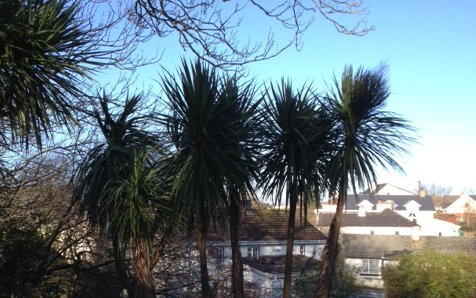
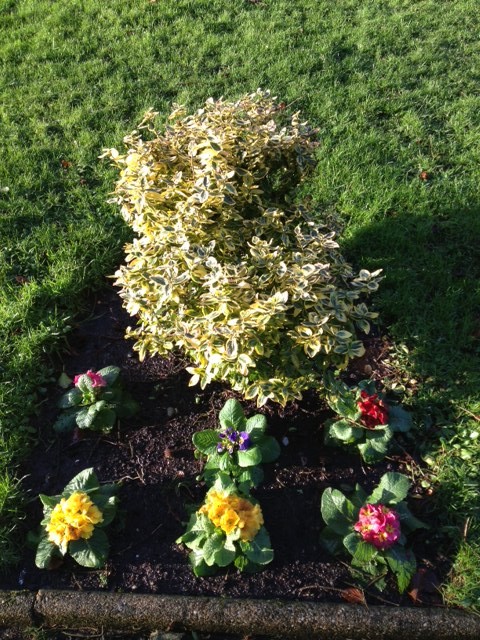
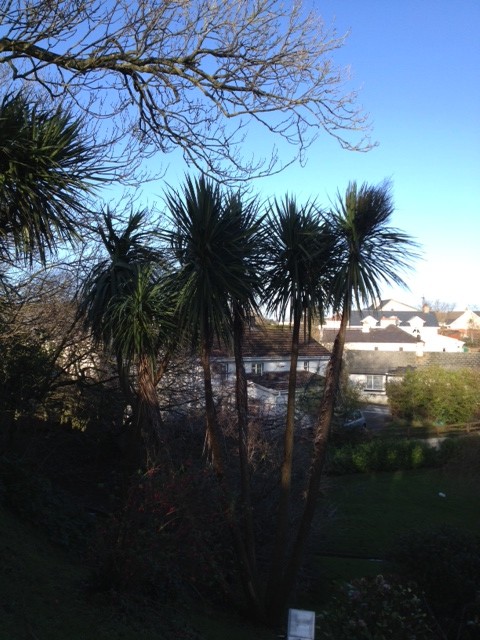
The secret of this part of Ireland is that it never gets a hard frost, and as a result right now the grass is lush and green, perfect grazing for horses and cows. Rhododendron are not far from blooming, and a palmetto is thriving in Jimmy’s parents, Florrie and Jim’s, backyard. The county lanes are flanked with stonewalls with the top stones spiked upwards. They are usually overgrown by ivy with fist-sized roots, gorse, and creeping vines that form windbreaks for the animals on the other side of the fence. Often they are so high you can’t see over them.

[Ireland – continued]

[codepeople-post-map]