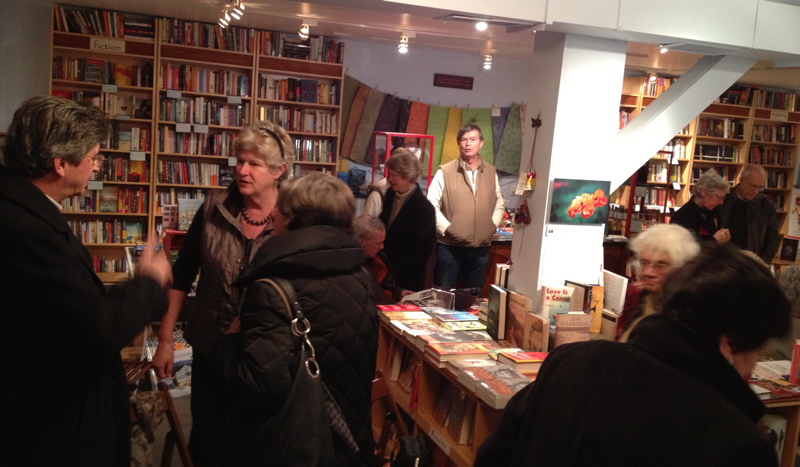
Thanks to friends and strangers who showed up for my book talk about “Never Ask Permission” at Over the Moon Bookstore in Crozet on the 23rd. You braved some serious cold to turn up, and not only listened but bought the book! Thank you, as well, to Anne and Laura, the sister owners of Over the Moon, for inviting me to give a book talk there.
Women in Combat
I was intrigued this week, when Secretary of Defense Panetta announced that women in the military would now be able to serve in combat positions. Their inability to do so up until now has understandably worked against their promotion; the rationale has been that they could not meet the physical requirements that men have to meet, especially in upper body strength.
Apparently, under the new rules, women will have to prove that they are capable of doing the job they would like to have, without down grading the physical requirements; a key to having men accept their presence.
Since I’m reading “Living with Honor” by Sal Giunta, who received the Medal of Honor in 2010, I immediately wondered if a woman would be strong enough to carry the SAW (Squad Automatic Weapon) gun that can fire 900 rounds per minute. This was Giunta’s heavy assignment, made heavier still by the steep terrain of the Afghanistan mountains. Carrying commo equipment also requires unusual strength.
I’m all for the women who aim high. It strikes me, though, that while in this transition the military see/saw will go through some wild swings before it achieves a balance that men serving with women can accept.
Now that an amazing trip to Argentina is over and its posts are on this blog, here’s how I’m looking at ongoing posts…..and I promise not to post if I have nothing to say. There will be a Facebook alert if I have posted.
What fun! An excuse to sound off on any number of subjects, issues, facts, truths and untruths, books, tempting recipes, religion, horses, editorials, getting old, dogs, travel, politics – and I’m sure more will occur to me.
What is my excuse? Well for one thing, the age-old “everybody’s doing it” (doin’ it, doin’ it) and more importantly, the release this fall by the University of Virginia Press of a paperback edition of my first book, “Never Ask Permission: Elisabeth Scott Bocock of Richmond.”
“Aunt Flighty” and “Mad Louie” (for the mad King of Bavaria who built castle after castle) were two of the other names ESB went by. I and my brother and sister called her “Mother;” (or Mamma if we were pleading with her) and we were at once both delighted participants and prisoners of her full court press through life.
She was a person of many passions and unbounded energy; possessed of a magnetic personality, beauty, and confidence so deep-seated that she never took “no” at face value. Add to this that inherited wealth gave her the means to exercise her passions, and you have a powerful person indeed.
What were these passions? First, long before it became fashionable, was a fascination with conservation, recycling, horticulture in general and the beautification of highways.
Next, her cousin, Mary Wingfield Scott, a well-known Richmond preservationist, interested her in all the houses that were in jeopardy as Richmond tore down historic houses to make way for parking lots, not recognizing the earning power of historic preservation where tourism was concerned.
Inevitably, ESB was a devotee of Jane Jacobs; and ended up by fusing her own beliefs in conservation and preservation into a theory of what makes a city beautiful and above all, livable.
As a result of concentrating on that, she often found herself on the side of the dispossessed, people whose neighborhood was being destroyed by an expressway, or residents of old houses in the path of Virginia Commonwealth University’s expansion.
When I wrote “Never Ask Permission” I didn’t think of it as particularly funny, but my readers have thought otherwise. What to me was “just mother” to others was extreme eccentricity, stubbornness, erratic behavior, refusal to bow to social norms, willfulness, winsomeness and so much else that made her one of this world’s originals.
So without apology I can say this is an unusual book about an unusual woman. I think you will be glad if you buy and read it.
And by all means come to Over the Moon Bookstore at “the” corner in Crozet 6:00 to 7:00 p.m. Wednesday, January 23rd where I’ll be talking about “Never Ask Permission.”
Spurred on by the James River Writers’ Conference in Richmond last fall, I am launching a website and blog that I started while Fred and I were on a trip to Argentina with a group of nine friends.
I am not the technical genius behind this. My friend Chris Read is making it happen from his base in Charlottesville. “We” have been building the website for the past month, what can be described as a “soft launch.”
The excuse for all this self-promotion is that the UVA Press just put out a paperback edition of “Never Ask Permission,” and the website is a platform for making that known and selling more copies of the book. Eventually the site will have parts of the book read out loud by me, as well as photographs of Mother’s family and of the Richmond of her era.
I hope that, if you enjoy the website and the blog, you will post comments and sign up for it, as that will help spread the news. Websites have to be popular to attract visitors. This is a startling new venture for me, but I have high hopes for it.
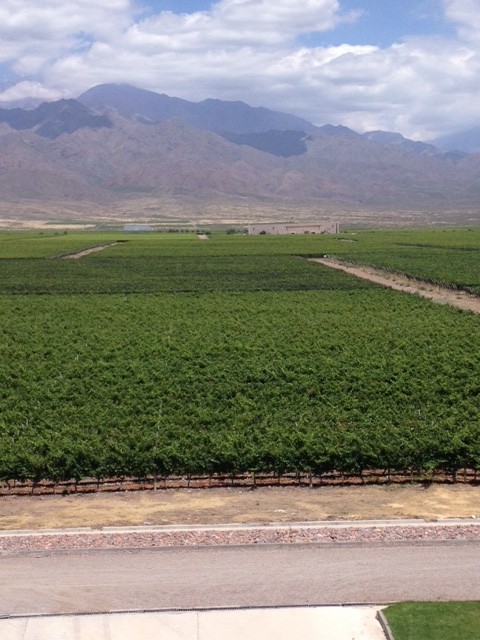
Argentina’s three main industries are oil and natural gas, wine and tourism. The most striking thing about Mendoza, ground zero of Argentinian wine making, is the size of the vineyards. Looking down from the air miles before the plane landed, you see acres and acres of long, rectangular green plots all dependent on irrigation, as are the clumps of green trees, bushes and flowers that follow the roads through what is otherwise an arid semi-desert.
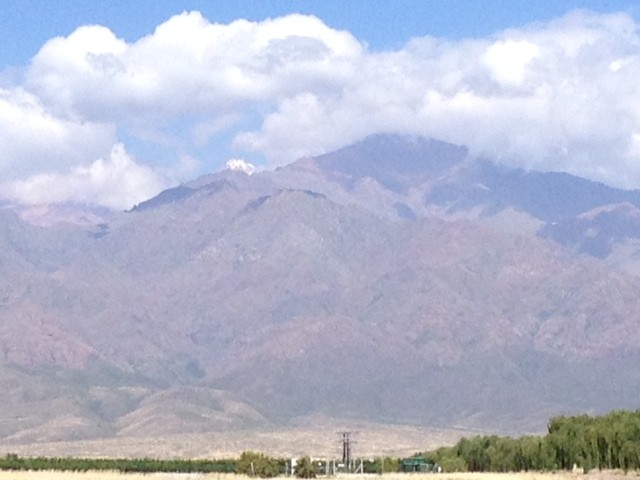
The Andes rise up to the west of the city like a Hollywood background set. The mountains were faint in the heat the few days we were there, as if you could push them over with your finger. They were gigantic, but also so seemingly insubstantial as to appear fake.
The first wine stock was brought to Mendoza in 1610 by the Jesuits. The trickle of immigrants from Spain and Italy became a flood when the train from B.A. arrived in Mendoza in 1885. Up until the 1970’s most of the wine produced in Mendoza was consumed in Argentina. Many different types of red and white table wines and blends of moderate quality were made; but the region was known for a red varietal from Cahors in France, unflatteringly called Malbec because the taste of it was “mal,” which means bad, on the “bec,” meaning mouth. The 1990’s saw the arrival of foreign investment, and the emphasis shifted to single varietals and from quantity to quality.
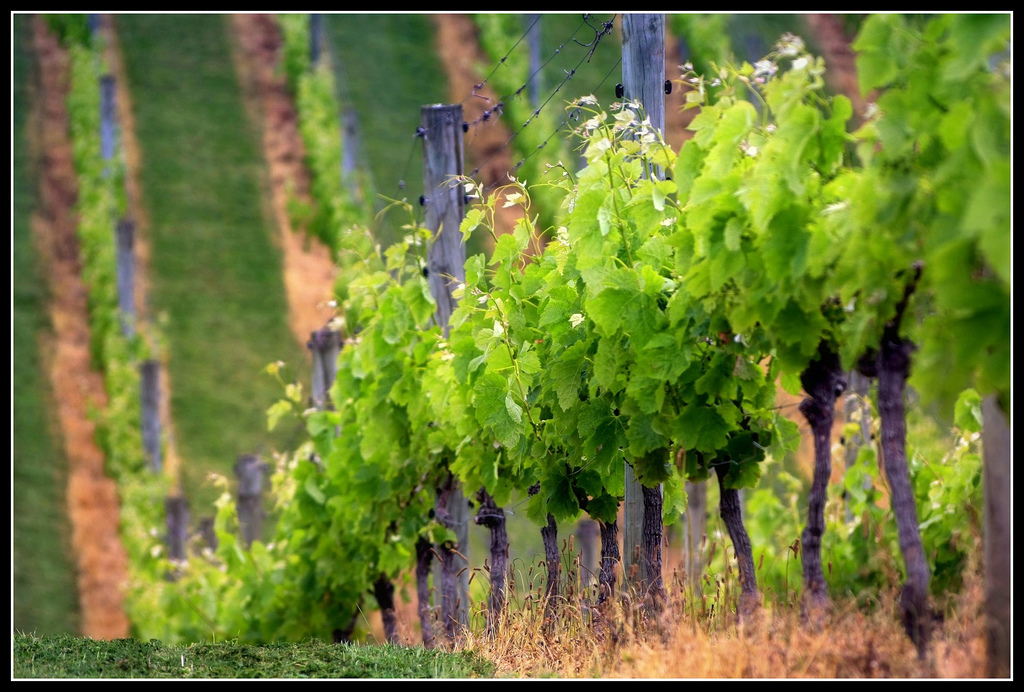
To achieve this quality, pruning is done twenty days before harvest to concentrate nutrients and to assure a dark, full-bodied character by sacrificing quantity. Because of the threat of damaging hail, many investors will spread their vineyards over a wide geographical area, specializing in blends of the same varietal from different microclimates.
I’ve written in a previous post about the importance of water rights to the snow melt from the Andes, which is stored in reservoirs and released at pre-arranged intervals to flow through canals and into the small trenches or the hoses that run parallel to the rows of vines. Without this resource there would be no wine making in Mendoza. What happens, then, if climate change causes less and less snow to fall in the Andes?
We spent all of one day in the Uco Valley, south and west of town and higher than most of the vineyards. On the way to the Clos de los Siete, gaining altitude, we passed vegetable gardens and peach, cherry and apple orchards.
The extent of Vineyards in Mendoza
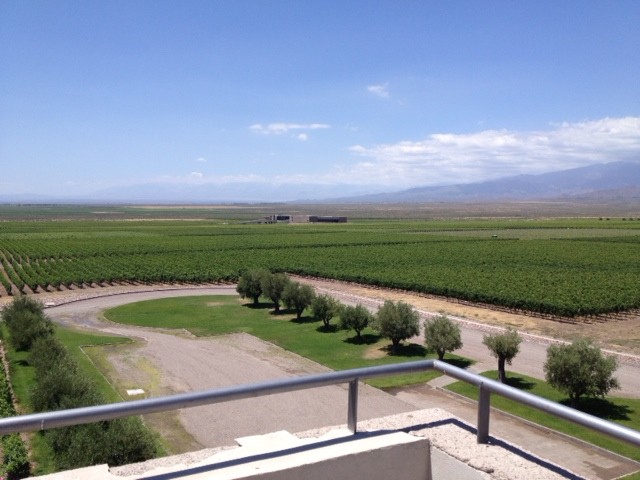
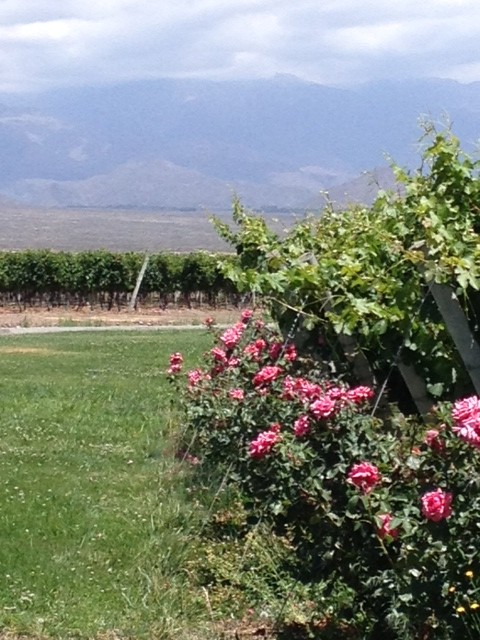
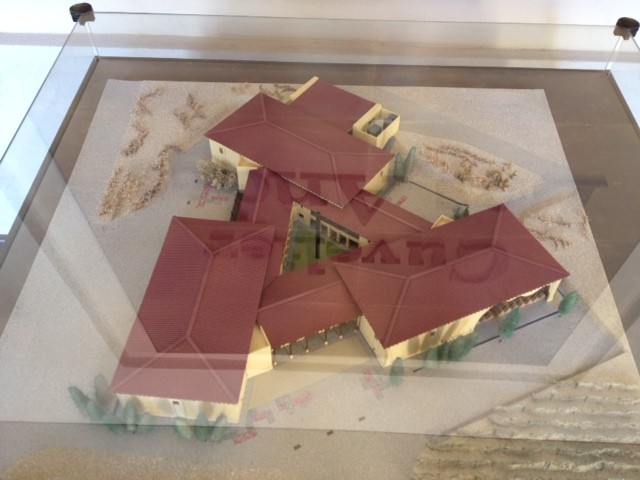
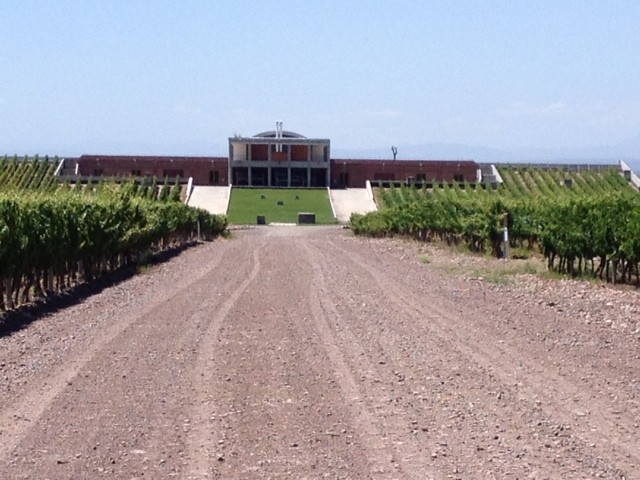
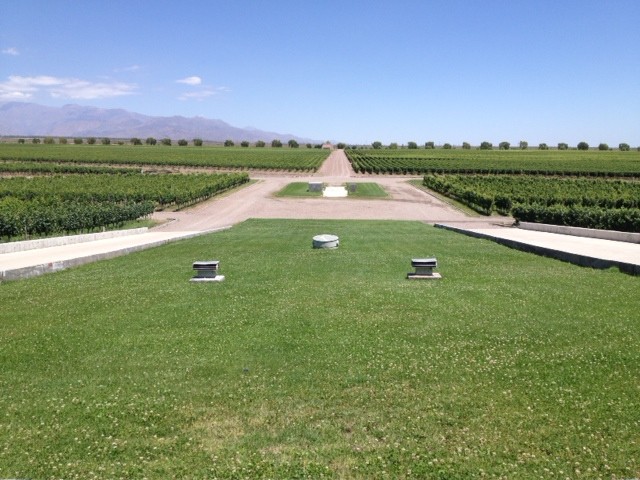
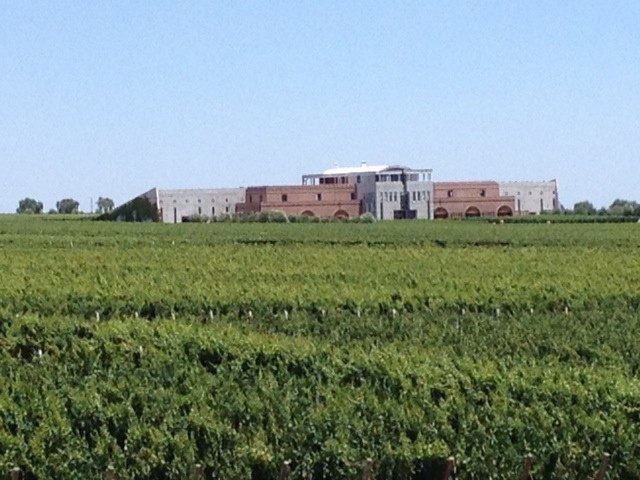
The two-thousand acre clos is the project of seven foreign investors, French, Italian and Swiss, several of whom already own chateaux with fine vineyards attached in Europe. They are escaping the myriad regulations of France and seeking to produce fine wines in greater quantities than they can in Europe. Five of the seven have their own wine-making bodegas on the property. It is an impressive sight as you drive in, nothing but vineyards stretching to the mountains, punctuated only by the five strikingly different in style bodegas in the middle of each property.
Weather conditions are near-perfect for grapes; constant sunshine, low humidity and water that is full of minerals can be depended on. Spraying with chemicals is not required. Hail is a constant danger, and the better vineyards put up netting on the sides of vines to protect from it.
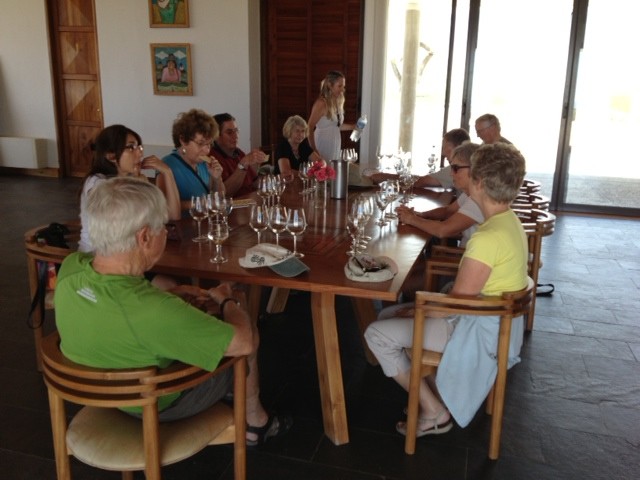
We visited three of the five bodegas, and were treated to a delicious lunch and wine samplings in the house-like apartment of one of the owners who was not there.
Their plants are only fourteen years old, and it takes one plant to produce one bottle of wine. They turn out one million bottles of Clos de los Siete (a red blend of grapes from all five wineries) a year, 80% of which is exported, which is why we see so much Malbec in the States these days. The producers are worried because 25 – 30% inflation has caused the Kirchner government to cut down on how much they can export, and importing the volume they require of real cork from Portugal and oak barrels from France is becoming difficult because the government wants the vineyards to use local products.
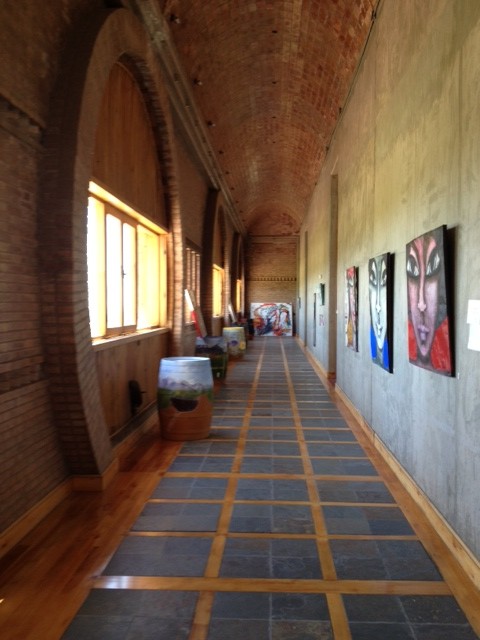
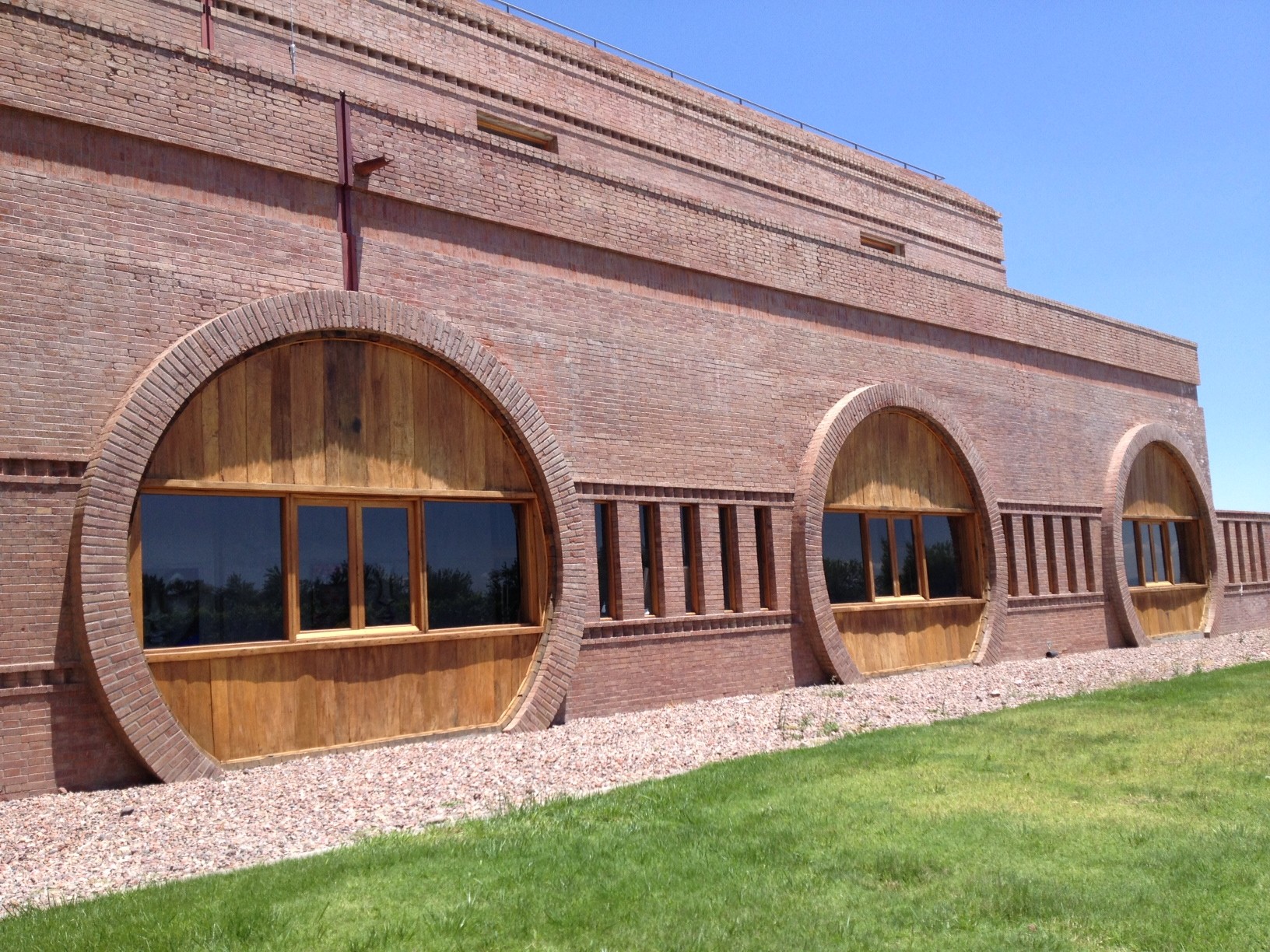
The three vineyards within the clos that we visited were Cuvellier de los Andes, diamAndes and Monteviejo.
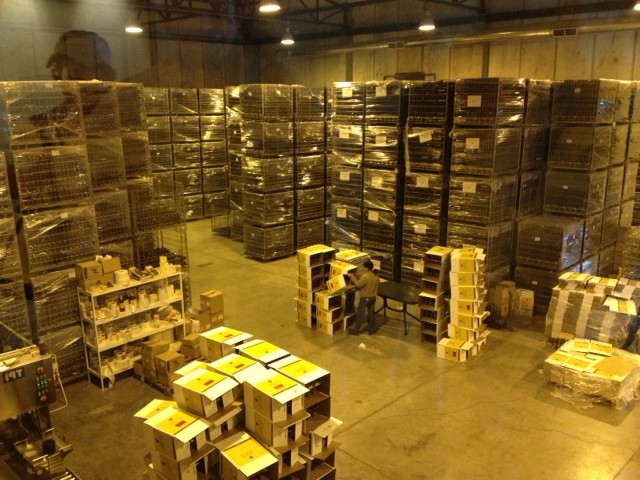
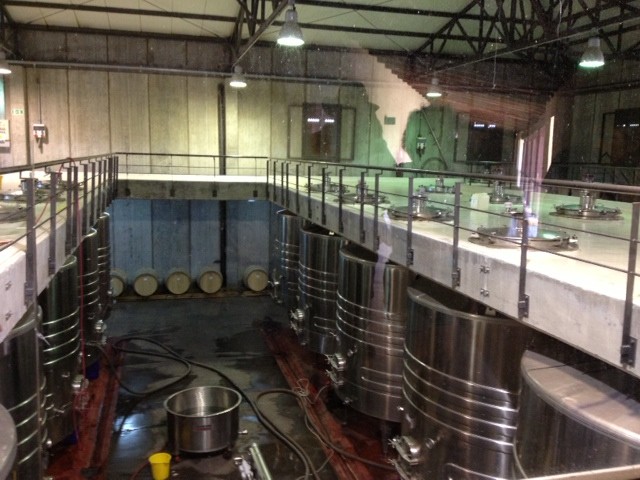
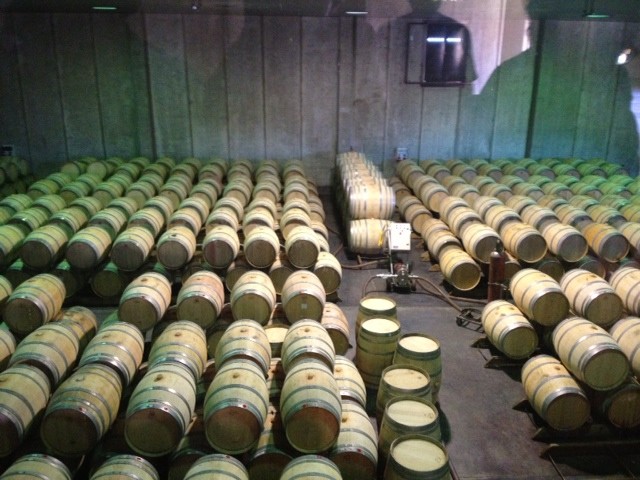
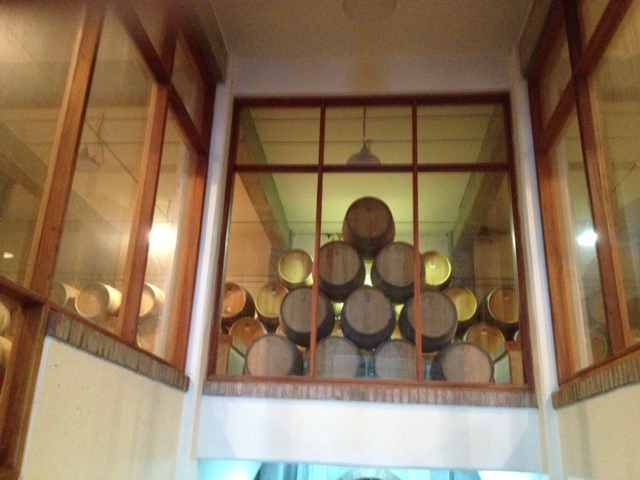
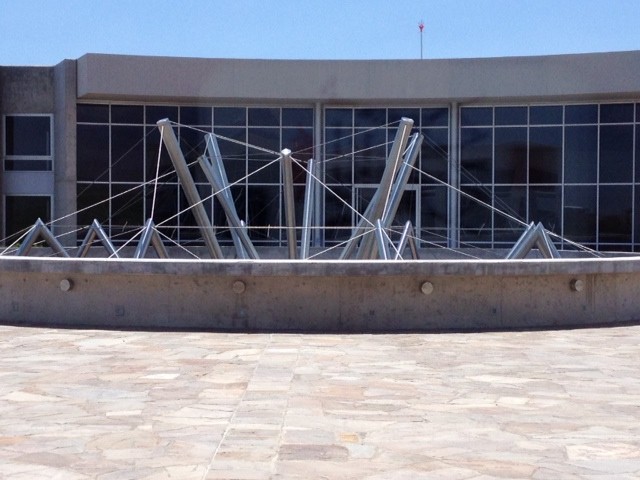
As far as the eye can see…Roses to keep pests away from vines…although they are not needed in their dry climate. They are planted for tradition’s sake.Box storage for shippingThe Andes from the Clos de Los SieteStainless steel tanks for fermentationAfter fermentation time in French oak barrelsVery traditional layout for this bodegaMonteviejo within Clos de Los SieteView from MonteviejoLunch at diemAandes in the owner’s apartmentWonderful mimicry of the wine barrel themeOutside as well as inside barrel themeLooking back on diemAandesThe wine is kept in the bottle at the winery approximately as long as it was kept in the barrel before being sold – longer for finer wines.The extent of Vineyards in MendozaDiamond sculpture in front of the winery – DiamAndes Winery in Clos de Los Siete
Coming here from Mendoza we flew into the local airport in the middle of town on the La Plata. The airport police were as good as their word and my fuzzy jacket was waiting for me.
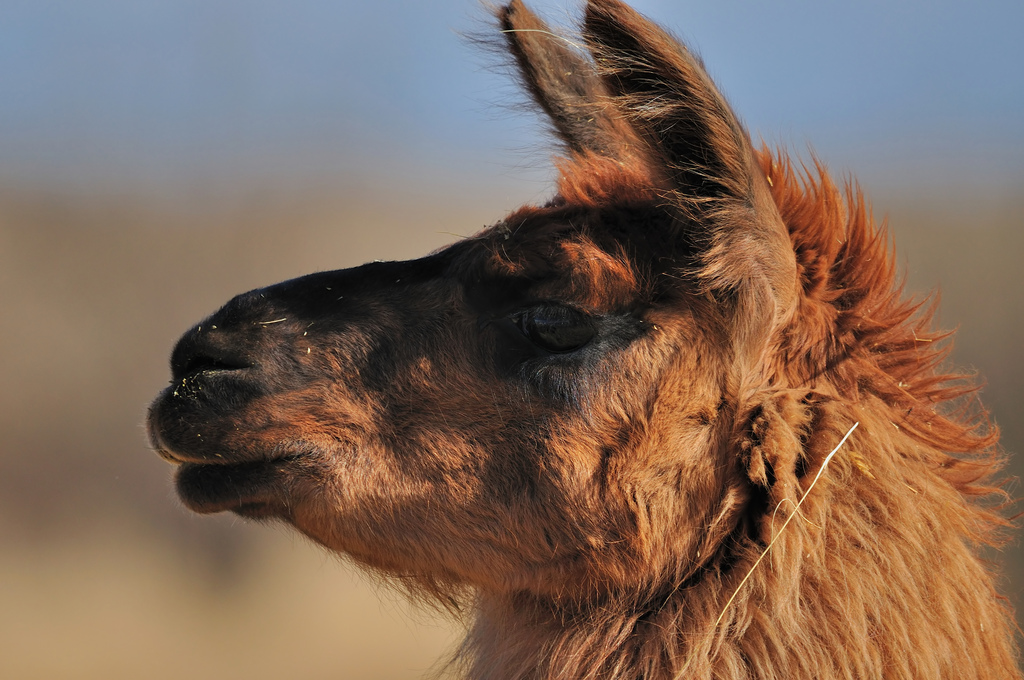
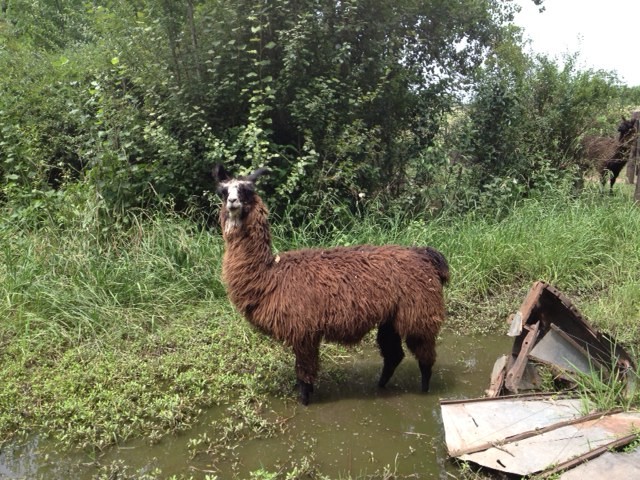
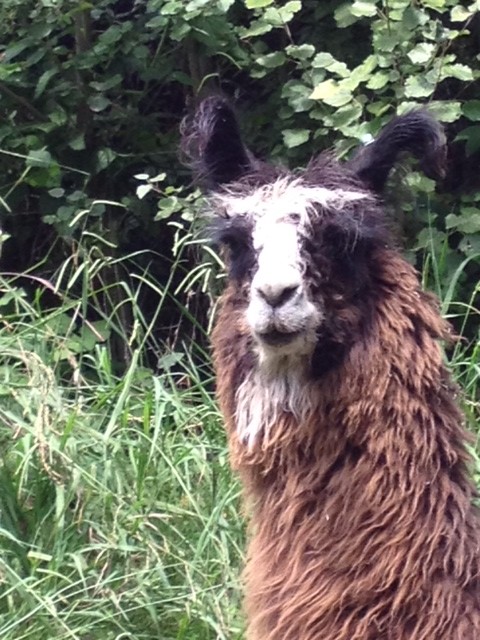
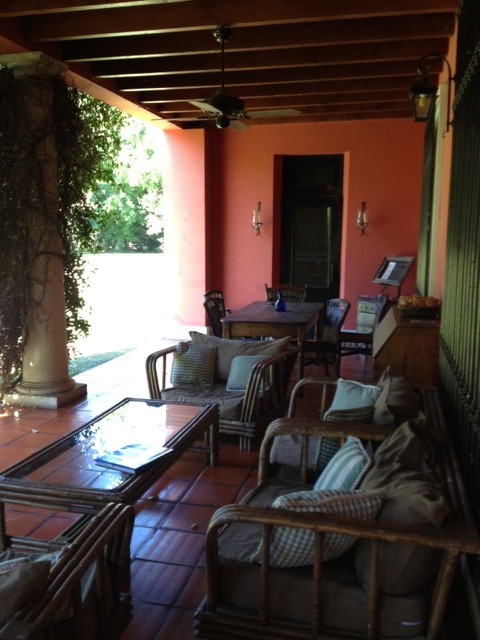
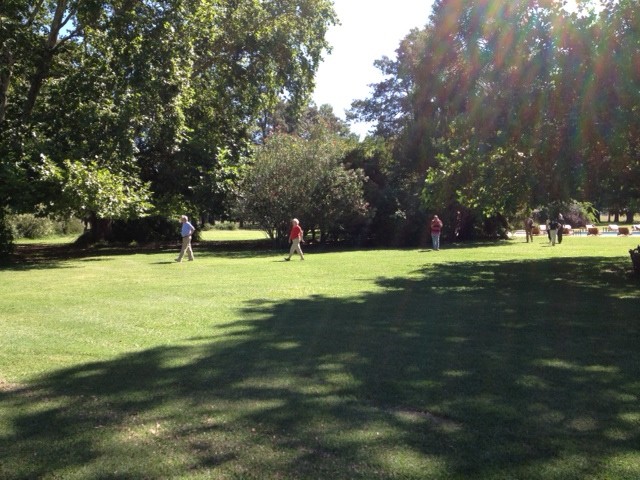
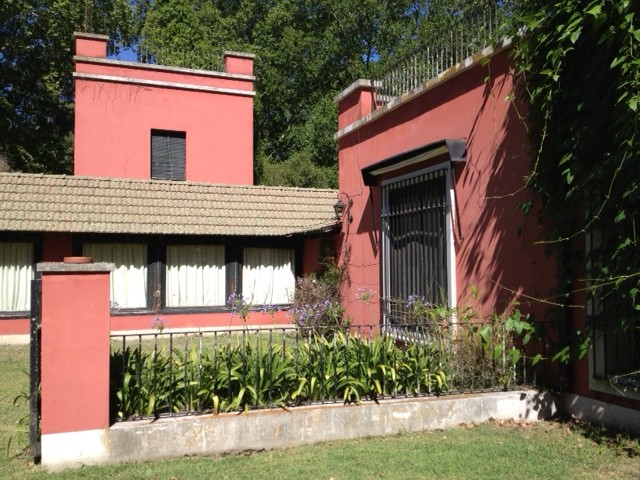
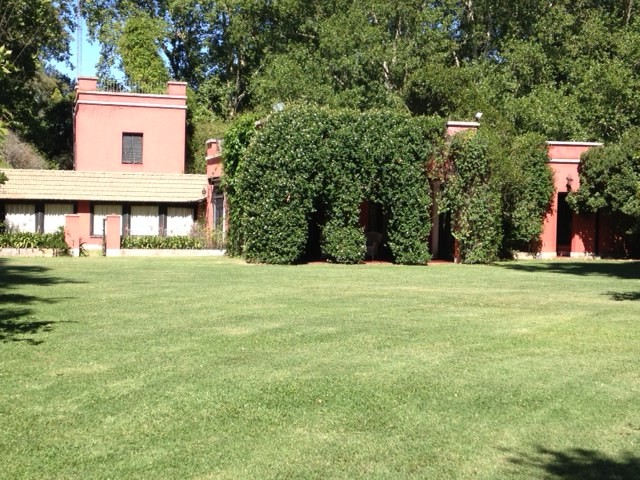
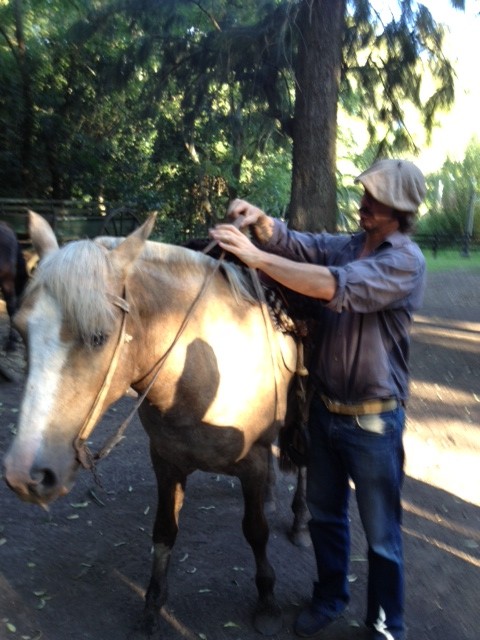
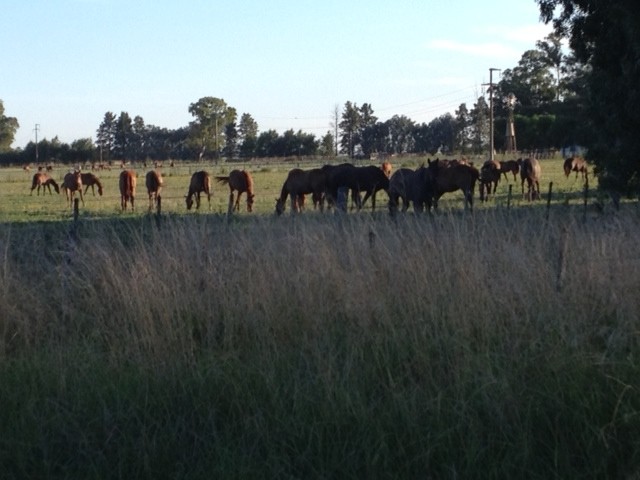
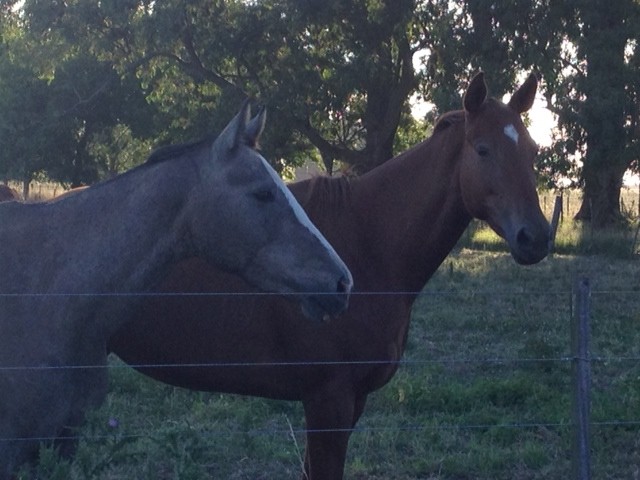
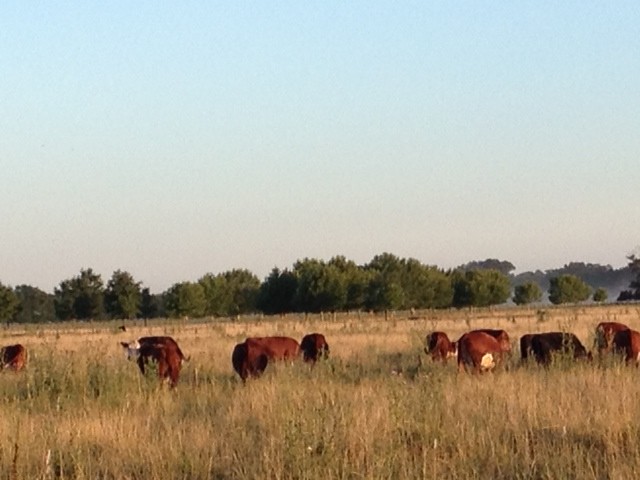
In the afternoon we were driven two hours west of the city to this small beef, llama, and horse ranch in the Pampas. It is a beautiful old house, very much in the estancia tradition; its glory is in the trees that encircle its huge lawn, planted about a century ago. Trees are not indigenous to the pampas, which is flat, with the grayish, flaky soil that makes it look like the Eastern Shore; broken, around here, by occasional wetlands and ponds.
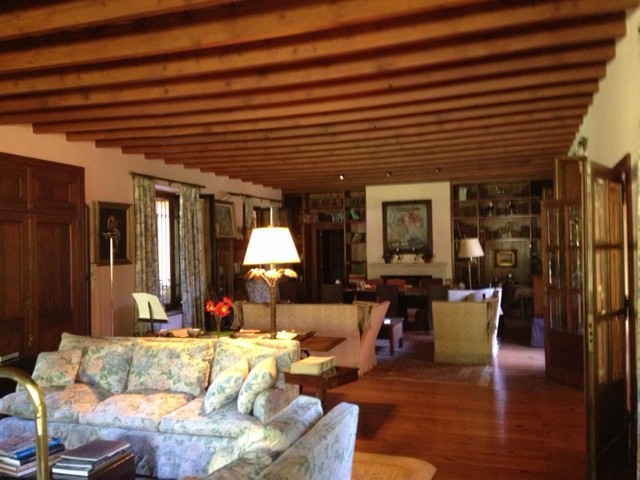
The house is actually quite large, but built to disappear into the landscape of plane trees, the biggest ginko I ever saw, crepe myrtle, and masses of climbing vines that shield windows and interior patios from the summer heat. Suites of rooms and one enormous master bedroom open off a long corridor that leads down to a living room that runs the length of the house.
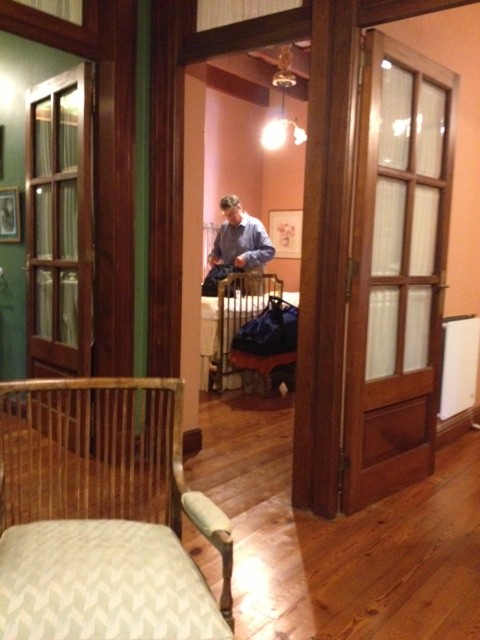
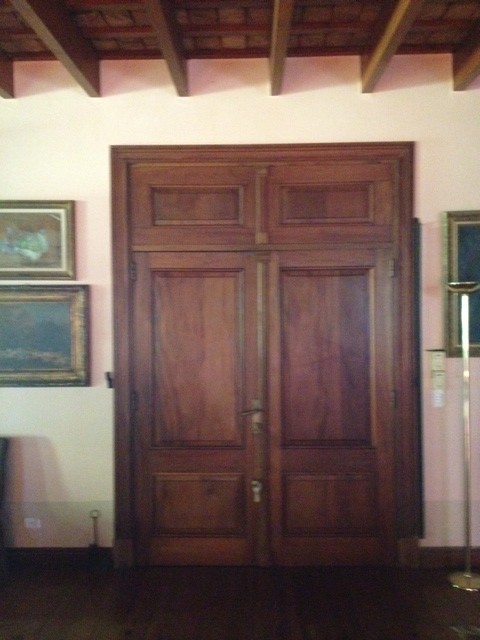
It has high ceilings, handsome doors, paintings, rows of bookshelves, and metalwork modern sculpture along with massive wooden furniture, some of which was made by our tall, eccentric host, Sebastian. The living room was the perfect place to gather for meals. This time of year, though, the place to sit is out on the covered terrace just off the living room with its two ceiling fans, and deep, comfy armchairs and sofas.
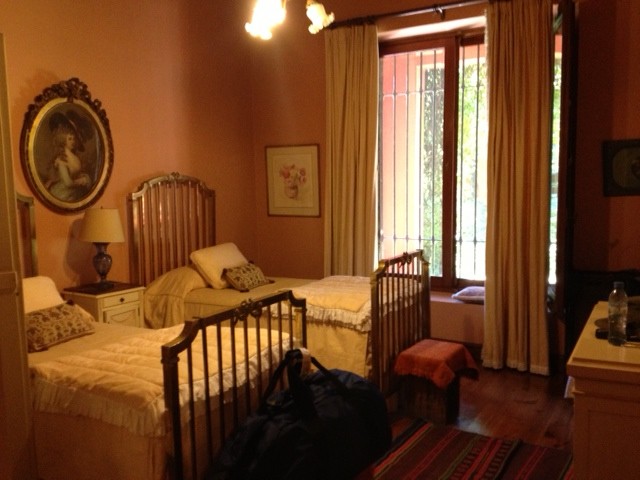
When we first arrived the heat in the afternoon was strong, but not humid. Since then it has reached the low nineties in the afternoon, but the humidity has set in; I can tell because the heat is more oppressive and my hair curls! This time of year the window curtains and doors are drawn tightly shut before noon, and they aren’t opened until the sun has set, so all day there is just a gloomy half-light in the hall.
Sadly, I can’t report much about activities on the Pampas, as I spent most of two days totally out of it with what I will refer to delicately as “an intestinal bug.” Believe me, that’s all you want to know about it.
The morning that I made it to the breakfast table I asked for tea and a soft-boiled egg. Argentinians do not eat eggs for breakfast, so it took some pantomiming to get across huevos in boiling water.
Ages went by and no egg appeared. Suddenly through the swinging door to the kitchen came not only Sebastian, whose English was excellent, but also the cook in her role as nutrition consultant. Both looked somber, and my first reaction was that the sole chicken had perished; but I knew this couldn’t be true as way before dawn every morning the clucking hens and crowing rooster pulled me into consciousness three and a half hours before the 8:30 breakfast.
The cook was wringing her hands, and Sebastian, earnestly explained that the cook could not bring herself to cook me an egg, as eggs were notoriously hard to digest and I would get sick again. Much better, they said, to have some quesos blancos and quince on a cracker. I promised just as earnestly NOT to touch an egg, and they went back through the swinging door. Ten minutes later out came not one, but TWO soft boiled eggs! Something was lost in translation. I thought it wisest to eat neither, both for diplomatic and digestive reasons.
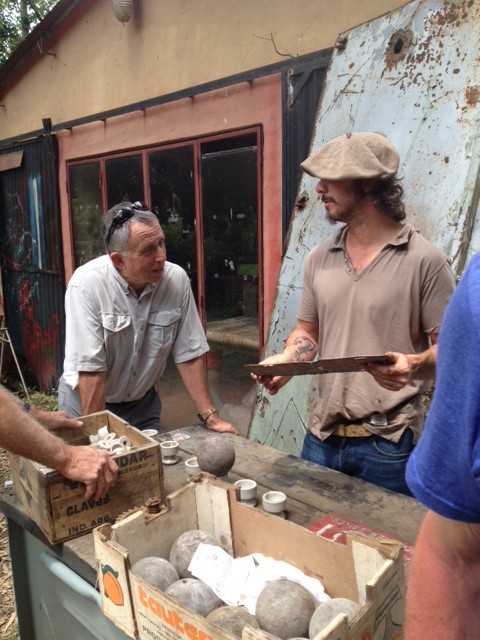
Things I can’t report on are a trip to a local auction, a popular social occasion where typewriters, aged stoves and chicken were among the things auctioned, horseback riding out to prime the windmills that keep the Criollo horses and cattle watered, and a string of what I hear were superb meals.
To paraphrase Jefferson, I can’t write a shorter letter because I don’t have the time; but I also can’t sign off without saying I’ve never been anyplace where birdsong was more varied or louder – parrots, crows, and mourning doves that were so numerous they sounded like a camp full of children. Amazing.
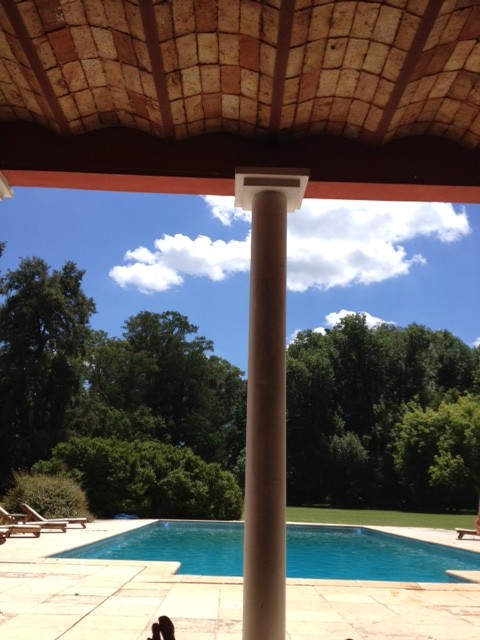
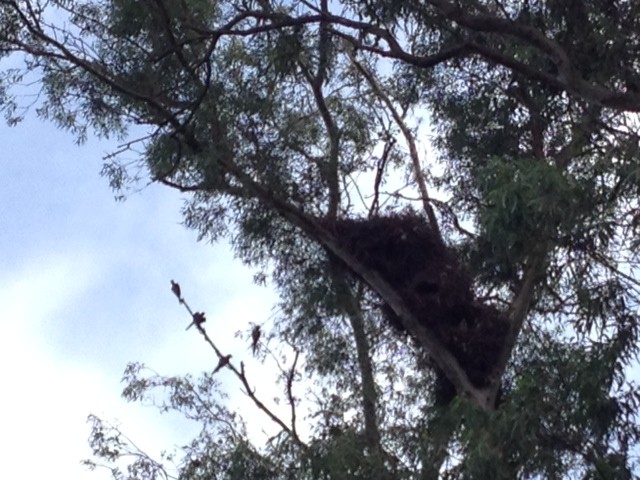
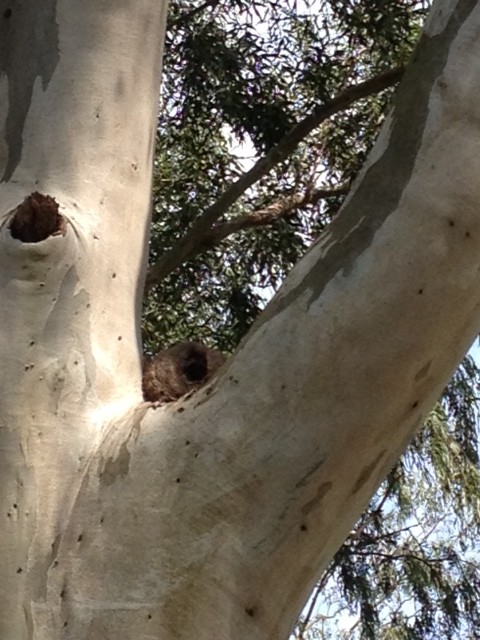
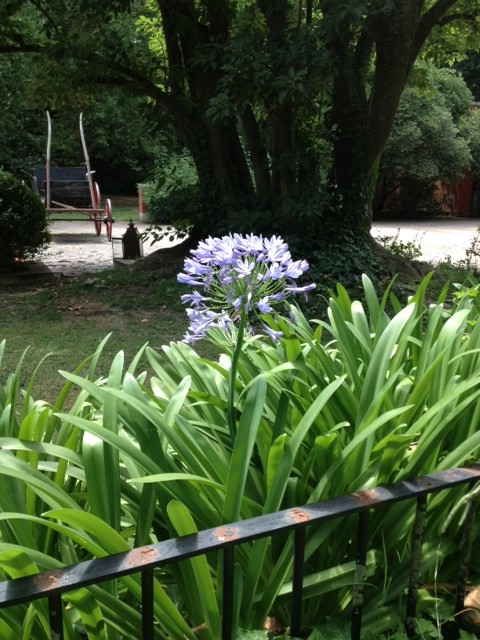
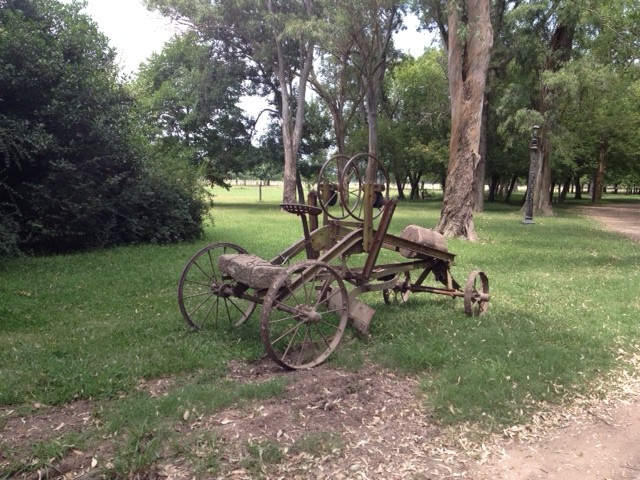
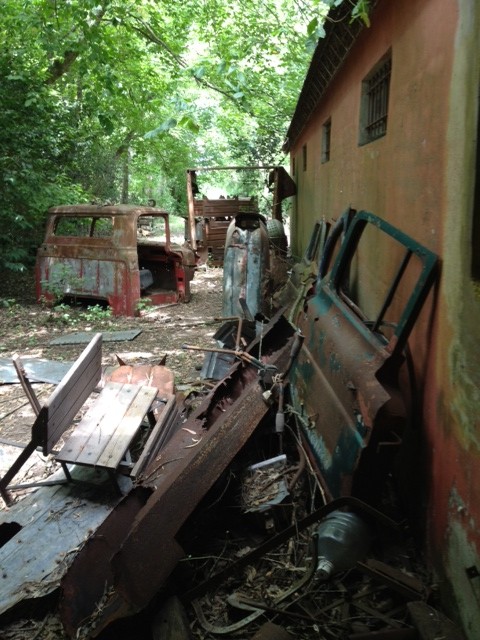
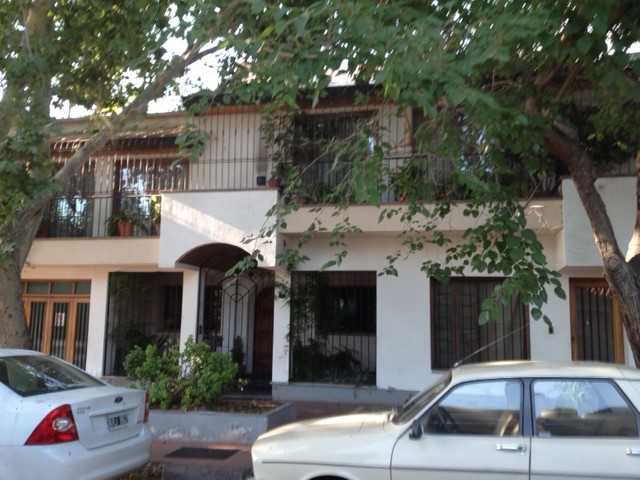
Those are my toes….recuperatingHuge green parrots nestMud nest for birds in notch of plane treeGarden week Tooters, someone know the name?Hot fur, cool waterLlama looking self-satisfiedOld road graderSebastian showing Mike U. part of his loot from the auctionSebastian’s junk metal for turning into sculpturePorches everywhere – very invitingMendoza – note bars on windows and doorsOur High Victorian BedroomChecking out the beautiful grounds at the EstanciaEstancia de Los CandelariaEstancia de Los CandelariaEstancia de Los Candelaria in the Pampas. The owner is a sculptor, painter and master carpenter.Unpacking in our apartment at the Estancia. Note the high doors and ceiling, all curtains drawn during the day for coolness.Sebastian showing how to hold reins! “Do NOT hold one rein in each hand…Polo ponies on their summer turnoutBeautiful living room at the estanciaTwo friendly fellasCows on the Pampas. All the trees in the background have been planted.Handsome, tall doors in Argentina